Trucker Payroll systems help fleets manage pay rules, deductions, hours, and reporting with fewer errors. This guide explains how trucker payroll connects to labor compliance, accurate timekeeping, and operational cost control. It also discusses how fleets evaluate vendors, what inputs are required, and practical conditions for implementation—staying objective and grounded in industry practice.
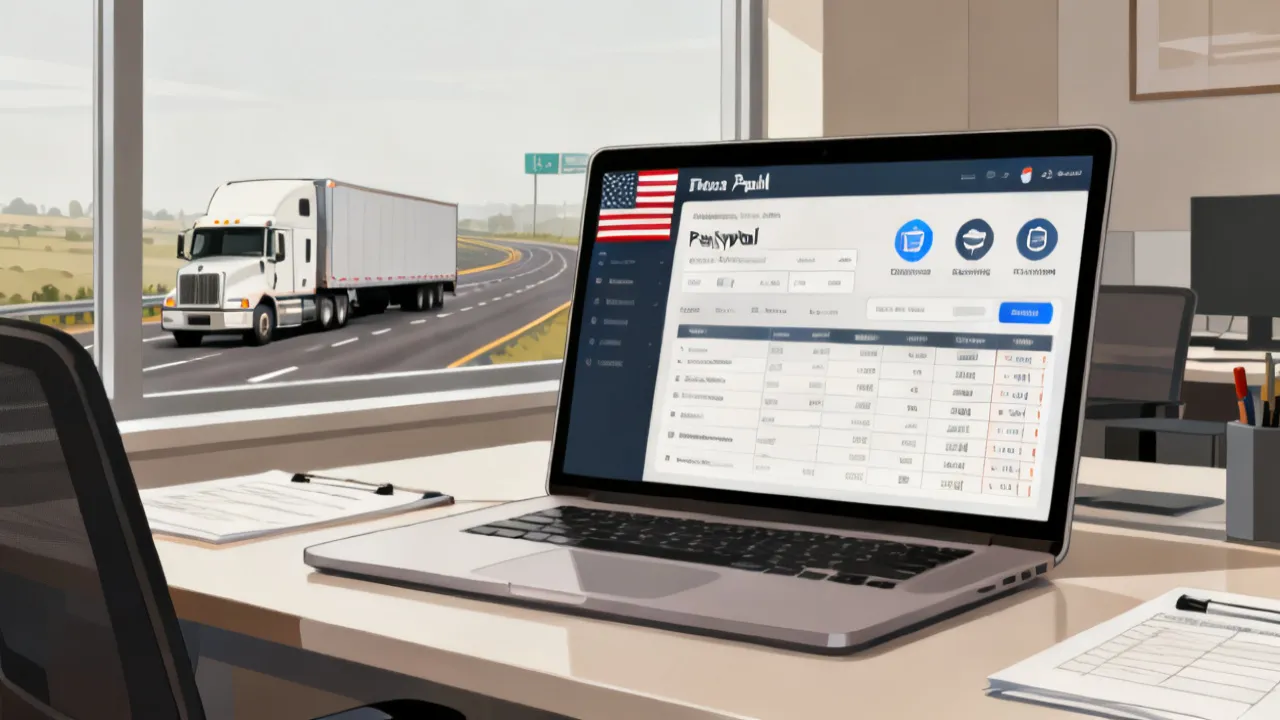
Trucker Payroll is the set of processes, policies, and systems fleets use to calculate driver pay accurately, document hours and earnings, apply required deductions, and produce audit-ready records. For operations managers and HR leaders, the very critical outcome is not just “getting checks out,” but reducing payment errors, ensuring regulatory alignment, and creating dependable cost visibility across routes, drivers, and pay periods.
In practice, Trucker Payroll touches every part of a fleet’s day-to-day workflow: dispatch schedules that affect hours, load types that influence pay categories, timesheets or telematics data that drive pay calculation, and payroll reporting that supports tax filings and labor compliance. Because trucking is regulated and operationally dynamic, payroll accuracy is a continuous control—not a once-a-month task.
When Trucker Payroll is functioning well, it feels invisible to the organization. Drivers receive understandable pay statements, supervisors spend less time answering “where is my accessorial?” questions, and payroll teams can explain earnings outcomes using clear evidence trails. When it is not functioning well, small data inconsistencies become operational emergencies: missed detention codes, misapplied mileage rates, duplicated accessorial events, late-approved adjustments that scramble close deadlines, and documentation gaps that leave the fleet unable to defend pay decisions in an internal review, audit, or dispute.
Because the financial impact of these issues compounds over time, Trucker Payroll becomes an operational backbone. It links compliance, labor cost controls, and customer service realities—since delays and exceptions that influence pay also influence customer commitments and carrier performance. In that sense, payroll isn’t just a compliance function; it is a structured translation layer between operational events (dispatch, loads, waiting time, breakdowns, yard movements) and the financial obligations the fleet must fulfill.
From an industry expert’s perspective, payroll problems in trucking usually stem from one of three root causes: (1) incomplete or inconsistent hours-of-work data, (2) unclear pay rules across lanes, job types, or contracts, and (3) weak documentation that makes it difficult to defend decisions in an audit or dispute. The goal of a robust Trucker Payroll framework is to address these root causes before they become operational disruptions or compliance exposures.
Rather than relying on manual corrections, leading fleets treat payroll as a controlled workflow with standardized inputs, approvals, exception handling, and records retention. Many organizations also align payroll governance with driver onboarding processes—because pay eligibility often depends on employment classification, agreement terms, and the way mileage, stops, or accessorials are defined.
To expand on that “risk and evidence” framing: in trucking, pay calculations are rarely purely mathematical. They require policy interpretation. For example, what counts as “detention” versus “layover”? When does a “wait time” event begin and end? Which stop qualifies as a “stop pay” event? If a driver is dispatched to a different pickup location late in the day, how is that change treated for the pay period? If a driver submits a timesheet late due to system access issues, does the fleet allow the entry and under what conditions? These are not trivial questions; they are points where policy meets reality. If the fleet cannot demonstrate that it applied policy consistently and supported outcomes with evidence, it increases legal and reputational exposure.
Therefore, the most resilient Trucker Payroll strategies emphasize evidence completeness and auditability at every stage: from how operational events are captured, to how data is validated, to how exceptions are adjudicated, to how payroll results are archived. The key is not only correctness, but defensibility.
While pay structures vary by carrier type, region, and labor model, very Trucker Payroll systems incorporate recurring components. Fleets generally need to define these elements clearly in order to produce consistent earnings statements:
In a well-designed Trucker Payroll process, every component is mapped to a source of truth (e.g., timesheet approvals, telematics event logs, dispatch system records) and a defined approval path before payroll is finalized.
It’s helpful for fleets to treat each pay component as a “mini contract” between operational systems and payroll outcomes. That means specifying: (a) eligibility criteria, (b) start/stop rules or measurement boundaries, (c) rate tables, (d) supporting evidence requirements, and (e) the approver(s) responsible for validating or correcting data. When you treat pay components as governed objects rather than ad hoc line items, you reduce ambiguity and improve training effectiveness.
For example, consider detention pay. A robust governance model often includes a defined detention threshold (e.g., begins after a grace period), a maximum payable duration per event, documentation requirements (e.g., yard check-in/out timestamps, door arrival logs, or confirmed time stamps), and a review mechanism when event logs conflict. Without these rules, detention can become a perpetual dispute category, with drivers submitting claims and supervisors adjusting entries inconsistently.
Similarly, mileage pay is often affected by route changes. A driver may be dispatched to a revised route due to customer instructions, weather, construction, or operational constraints. A defensible mileage model accounts for how the fleet determines “official miles” and whether it uses dispatch route estimates, GPS-based mileage, or a hybrid approach. The more explicit the policy and the clearer the distance evidence, the fewer manual interventions become necessary.
Truck operations are shaped by labor and hours-of-work rules, and payroll must reflect the correct treatment of time and earnings. A responsible Trucker Payroll program typically ensures that pay calculations align with applicable requirements for hours tracking and compensation categories.
For objective grounding, it’s helpful to refer to U.S. federal guidance where relevant. For example, the U.S. Department of Labor (DOL) provides wage and hour resources under the Fair Labor Standards Act framework, and the Federal Motor Carrier Safety Administration (FMCSA) addresses hours-of-service rules for commercial motor vehicle operators. Fleets should coordinate HR, payroll, and compliance teams so payroll calculations reflect the appropriate regulatory logic.
Sources (general reference): U.S. Department of Labor, Wage and Hour Division resources; FMCSA Hours of Service materials.
While many fleets focus on hours-of-service recording for operational safety, payroll compliance also depends on how “work” is defined for wage calculations. In trucking, the “workday” can be complicated by pre-trip activities, post-trip tasks, loading/unloading that may fall outside standard time blocks, and waiting time that may or may not count depending on rules and policies. Payroll systems must be able to capture those distinctions and convert them into consistent pay categories.
Compliance also intersects with classification. Whether a fleet uses employees, owner-operators, or a mixed model changes which rules apply and what evidence needs to be collected. Misclassification can lead to significant legal exposure. Even when classification is correct, pay components such as bonuses and reimbursements can be treated differently depending on the employment model and the nature of the payment. A careful Trucker Payroll framework clarifies those distinctions to prevent accidental policy violations.
Additionally, recordkeeping requirements matter. Defensible payroll outcomes require retention of timesheets, approvals, event logs, and calculation logic. Many disputes are decided not on what the fleet “meant,” but on what the fleet can demonstrate. Therefore, payroll governance must include not only calculation accuracy but also document retention schedules and accessibility for internal and external reviews.
Finally, compliance is not a one-time checklist. Laws and enforcement priorities can shift. A mature approach includes periodic reviews of pay rules, audit spot checks, and updates to training content when policies or regulatory interpretations evolve.
Payroll often becomes a cost center in perception, but its deeper role is cost governance. Trucker Payroll systems can reduce rework and avoidable overruns by improving calculation consistency and speeding up exception resolution. At the same time, cost discipline should never be pursued by underpaying or shifting risk into undocumented adjustments.
When evaluating payroll efficiency, experts generally look at control metrics such as:
These metrics are more reliable than informal perceptions because they tie payroll performance to measurable workflow outcomes.
Cost control is sometimes misunderstood as “reduce payroll expenses.” A better framing is “reduce payroll volatility and rework.” Rework costs include staff time, system processing time, driver dissatisfaction, and potential compliance risk. Underpaying can reduce short-term expense but increases long-term risk via back pay liabilities, complaints, turnover costs, and legal exposure.
Therefore, the strongest cost governance comes from consistent pay rules and high-quality inputs. When drivers understand how to enter or confirm events, and supervisors understand which evidence is required, payroll becomes less of a guesswork function and more of a controlled, repeatable process. That reduces both direct labor cost (less corrections) and indirect cost (less escalations).
To connect payroll performance metrics to financial outcomes, fleets often build a “pay variance dashboard” that compares expected versus calculated earnings by driver group, lane, or pay component. Variance analysis can reveal operational changes: e.g., a lane shift increases detention claims, or a new customer process causes more waiting time. Instead of treating those as anomalies, the fleet can adapt dispatch practices and training—ultimately aligning operational performance and pay costs.
However, variance analysis must be designed carefully. The dashboard should highlight true drivers of variance (event coding differences, updated rate tables, new dispatch behaviors) rather than merely highlighting numeric differences with no explanation. Otherwise, payroll becomes reactive and labor cost governance becomes superficial.
In trucking, the quality of payroll output is only as strong as the inputs. A typical Trucker Payroll pipeline includes data capture, validation, calculation, approval, and reporting. The critical question is not “which software is top,” but “which workflow controls are enforceable across shifts, dispatch changes, and driver availability.”
Common success patterns include:
Weakness often appears when the fleet uses multiple tools without a reconciled workflow—e.g., telematics events recorded in one system, manual adjustments in another, and payroll calculations occurring in a third. The more handoffs, the greater the chance of mismatched definitions.
To expand on “workflow controls,” consider the lifecycle of a single pay period. During the week, dispatch creates a sequence of loads. Telematics and yard systems may record start and end times for certain events, but those logs might not map directly to payroll categories. Meanwhile, drivers submit timesheets daily (or after each load) and may enter accessorial events that are later verified. Supervisors approve timesheets and detention claims. Payroll then calculates earnings and produces statements. The process succeeds when these steps use shared definitions and when exceptions are managed in a consistent way.
Many failures occur at boundaries. Common boundary failures include:
A resilient Trucker Payroll framework designs around these boundaries using automation and enforced validation. For example, it can require that an accessorial event code cannot be saved without selecting an associated reason for the event, attaching evidence, or referencing a dispatch confirmation. It can also enforce that when a driver changes a timesheet after cut-off, the system routes the change through an exception workflow rather than allowing silent modification.
Furthermore, validation should be layered. Not all missing data can be prevented at input. A robust system should perform validation checks before calculation: ensure that required evidence is present for each accessorial claim; ensure that rate tables exist for the job type; ensure that a driver’s pay category is active for the pay period; ensure that mileage inputs fall within reasonable bounds; and ensure that approvals are in place for the finalization step.
Finally, the calculation engine should be transparent. Complex pay structures can lead to disputes if drivers cannot understand why certain amounts were calculated. While payroll teams may not publish the full calculation logic, the system should enable internal explanations and produce a breakdown that can be reviewed in disputes.
Many fleets consider outside payroll vendors or software suppliers when scaling operations or reducing manual workload. Although your exact vendor landscape may differ, expert evaluation typically covers three areas: operational fit, compliance controls, and implementation support.
Because the prompt provided no specific named supplier, this article uses objective evaluation criteria rather than claiming particular vendor features. You can adapt these criteria when you compare offerings or request proposals.
When fleets compare suppliers, it’s easy to focus on user experience—how intuitive the interface feels—and to underestimate how payroll control is achieved. The most important vendor differentiators are often under the hood: integration reliability, data model fit, configurable approval workflows, the audit trail granularity, and the ability to enforce data quality before payroll runs.
Another important aspect is roadmap and update governance. Payroll rules can change due to regulatory updates, wage increases, new benefit deductions, or customer contract revisions. A vendor with a strong update process and a clear release cadence can reduce maintenance burdens. But fleets should evaluate whether the vendor’s update model might force recurring configuration work or require extensive internal technical support.
Also consider the vendor’s support model. Payroll failures are often time-sensitive; if a system issue occurs close to payroll cut-off, you need responsive support and clear incident management. Ask vendors how they handle outages, how quickly they respond, and whether they provide escalation paths during critical payroll windows.
Before selecting a Trucker Payroll supplier or product, consider the following:
Well-managed vendor implementations typically include training on event coding and exception resolution—because software performance depends on the processes around it.
To make the evaluation even more operational, fleets often create a small “pay governance scorecard.” Each evaluation category is weighted based on your operational realities. For example:
In addition, ask the vendor how they handle changes over time. For example, if a customer contract changes the detention rate mid-quarter, how quickly can the system adapt? Is historical calculation preserved? Can the system apply new rules only to relevant dates while keeping prior periods consistent? These change-management capabilities are often what differentiate a payroll system used successfully from one that becomes a constant maintenance burden.
Trucker Payroll operations can vary by jurisdiction, labor rules, and administrative practices. If your fleet operates across multiple states or provinces, your payroll governance should accommodate jurisdictional reporting and policy differences. In many fleets, cultural expectations also matter: drivers may be accustomed to particular timesheet formats or approval routines, and supervisors may have established habits for documenting detention, layovers, or accessorial events.
For top results, fleets often start with a controlled pilot (one region, one pay cycle, limited lanes) before expanding. This approach aligns the system’s configuration with real-world behavior rather than idealized workflows.
Localization is not only about taxes and statutory reporting; it also affects how pay elements are applied. For instance, certain categories of waiting time or pay for travel may be treated differently based on jurisdictional wage-hour interpretations, local labor enforcement priorities, and the nature of employment arrangements. A well-governed Trucker Payroll framework incorporates these differences into configuration and training.
Additionally, localization affects operational data standards. Different terminals may record check-in/out times with different granularity or different event identifiers. If the system expects uniform evidence, the fleet may need to standardize how terminals record operational timestamps or create mappings that transform terminal-specific data into payroll-friendly definitions. That transformation must be consistent and auditable.
Localization also influences communications. Drivers in different regions may have different expectations for how to submit evidence, when they can request adjustments, and who approves their corrections. Your payroll workflow should clearly communicate these steps and must be designed to reduce confusion. Confusion is expensive in payroll because it leads to manual interventions, late approvals, and inconsistent documentation.
Although the prompt references “price information,” no specific pricing figures were provided. In trucking payroll buying decisions, experts recommend avoiding cost comparisons that ignore total workload. Instead of focusing only on subscription fees, compare the full cost of ownership:
This method keeps Trucker Payroll procurement grounded in measurable operational outcomes rather than incomplete price snapshots.
To expand on total cost of ownership, consider also:
One practical approach is to model expected annual correction hours and reprocessing events. For example, if current payroll processes require X hours per pay period for corrections and you expect to reduce that by a certain percentage, you can convert the difference into an approximate labor savings estimate. Then compare that against implementation costs and recurring support fees.
However, be careful: savings assumptions should be grounded in a realistic pilot. The fleet should measure correction reductions, exception cycle time improvements, and audit readiness benefits during the pilot before scaling expectations.
The following supplements the main discussion with a structured comparison and a controlled implementation approach. (Per your request, no links are included in the table.)
| Evaluation Area | How to Compare Options | Source Basis (Objective Reference) | Step-by-Step Guide (High Level) | Conditions / Requirements |
|---|---|---|---|---|
| Data Sources for Pay Calculations | Map each pay component to its source of truth (timesheets, telematics events, dispatch records) and confirm definitions match. | U.S. DOL wage and hour guidance; FMCSA hours-of-service materials (where applicable). | 1) List pay components and required evidence. 2) Identify system inputs. 3) Test with sample pay periods. 4) Confirm reconciliation reports. | Recorded events must be consistently coded; approvals must be tracked. |
| Compliance Controls & Audit Trails | Check whether the system preserves who changed what and supports defensible calculation logic. | General recordkeeping expectations reflected in wage-hour enforcement guidance. | 1) Define audit scenarios. 2) Test scenario reconstruction. 3) Validate retention settings. 4) Review exception logs. | Access controls must be configured; audit retention policies must be set. |
| Exception Handling Workflow | Compare how each option routes missing data, late entries, and disputed accessorials. | Top practices aligned with payroll governance principles. | 1) Define cut-off rules. 2) Create exception categories. 3) Assign approvers. 4) Run mock payrolls to measure correction cycles. | Supervisors must know how to document exceptions; drivers must follow entry procedures. |
| Implementation Plan & Training | Compare onboarding structure, training content, and support responsiveness. | Industry implementation guidance and vendor onboarding norms. | 1) Conduct requirements workshops. 2) Configure pay rules. 3) Train payroll staff and supervisors. 4) Run pilot cycles and refine. | Availability of subject-matter owners (payroll + compliance + operations) is required. |
| Reporting for Operations and Finance | Evaluate whether you can view payroll cost by lane, driver, pay component, and period. | Standard accounting and payroll reporting principles. | 1) Define required dashboards. 2) Validate export formats. 3) Align with accounting close procedures. 4) Confirm consistency with general ledger needs. | Chart of accounts mapping and consistent identifiers are necessary. |
Below is an operational guide that assumes you want fewer corrections, clearer pay logic, and stronger audit readiness. It is written from a workflow-first viewpoint so it applies regardless of which supplier you choose.
To make these steps more actionable, fleets often create a “pay governance calendar.” This calendar defines the rhythm of payroll preparation: when timesheet deadlines occur, when approvals must be completed, when exception workflows close, and when payroll runs can safely begin. A governance calendar reduces stress and prevents last-minute changes that can undermine accuracy and audit readiness.
In addition, implement a clear escalation ladder. For instance, the exception workflow might include levels such as: Level 1 (supervisor verifies evidence), Level 2 (payroll analyst validates against pay rules), Level 3 (compliance review for unusual cases), and Level 4 (executive approval for policy exceptions). Escalation rules help prevent “circling” issues and ensure that decisions are made by the appropriate authority.
Another practical tool is the “pay component dictionary.” This is a controlled set of definitions for every pay component and accessorial category used in the fleet. It includes the rate, measurement rules, required evidence, eligibility criteria, maximum pay limits (if any), and the approval authority. When payroll staff, operations staff, and supervisors use the same dictionary, disputes decrease because everyone refers to the same standardized definitions.
Finally, build “reconciliation checks” into the process. Reconciliation checks ensure that the totals in payroll outputs match what finance expects. Common reconciliation checks include verifying earnings totals per pay period, verifying that deductions and benefits align with separate benefit systems or payroll registers, verifying that driver counts and pay category counts match expected roster data, and verifying that adjustments are applied only once. Reconciliation checks are the final defense against subtle errors that can otherwise slip into pay statements.
These conditions can be expanded into more detailed enabling factors.
Clear ownership means you should assign not only a project manager, but also functional owners for policy and evidence. For example, operations owns whether detention begins after check-in or after door arrival; compliance owns how evidence retention is handled; payroll owns how rates are configured and how overrides are tracked. Without these role definitions, changes get made ad hoc, and the audit trail becomes incomplete.
Process discipline is the practical truth behind successful implementations. Even sophisticated payroll systems cannot compensate for missing or inconsistent timekeeping. Therefore, fleets should design data capture methods that reduce friction. If drivers have to remember complex codes during busy dispatch windows, errors increase. Simplify user flows, include validation rules, and provide quick guidance—especially for accessorial categories that drivers record frequently.
Realistic pilots are critical. Many pilot designs fail because they test only “happy path” cases. The pilot should include edge scenarios such as: driver switches employment category mid-pay period; a load is reassigned after arrival; a detention event requires manual override; a timesheet submission is late due to connectivity issues; and a pay rule rate table changes for part of the pay period. Testing these cases reveals weaknesses in exception handling and audit trail completeness.
Change management includes communications that are specific and operational. Drivers want to know what changes to how they submit timesheets and accessorial events. Supervisors want to know what evidence they must review and how approvals should be documented. Payroll teams want to know when cut-offs shift and how exceptions will be routed. Generic training sessions often fail because they do not tie to real examples.
Documentation retention ensures that your payroll decisions remain defendable long after pay periods close. Consider retention for: timesheets, approvals, accessorial evidence, event codes, system change logs (for configuration changes), and audit trail exports. Ensure retention also includes exceptions—because exceptions are the events most likely to be disputed.
Beyond selecting a system, fleets can improve Trucker Payroll outcomes by adopting operational design patterns that reduce disputes and corrections. These patterns are not vendor-specific and tend to provide immediate improvements:
1) Evidence-first accessorial approvals
When a driver claims an accessorial, require evidence selection at the time of claim submission. If the event lacks evidence, the claim should be flagged for review rather than allowing “save now, prove later.” This reduces end-of-cycle evidence scramble and improves audit readiness.
2) Rate table governance with effective dates
For any pay component that can change (mileage rate, detention rate, incentive thresholds), implement rate tables with effective date ranges. This ensures that historical periods use the correct rates and prevents accidental retroactive changes.
3) Exception categories mapped to root causes
Instead of treating all exceptions as the same, define categories such as “missing event,” “late approval,” “rate mismatch,” “evidence missing,” “duplicate entry,” and “dispatch mismatch.” Then track exceptions by category to identify which upstream process needs improvement.
4) Supervisor training with scenario-based examples
Training should present real cases: a load arrives 20 minutes late, yard check-in occurs after a known cutoff, a detention clock resets due to a guardrail rule, or a wait event overlaps with layover. Scenario training improves consistency more effectively than generic definitions.
5) Driver-friendly pay statement breakdowns
A clear pay statement breakdown helps drivers understand what they earned and what evidence supports it. Even if drivers do not see every internal detail, they should see enough structure to reduce questions and disputes. Clear pay statements also help payroll teams resolve disputes faster.
Audit readiness often fails for reasons unrelated to payroll calculations. A fleet may calculate correctly but be unable to reconstruct the decision path because approvals are not captured, or because evidence is stored in disconnected locations. An audit-ready Trucker Payroll framework includes both computational correctness and evidence completeness.
To build audit readiness, fleets often adopt the following approach:
It can be helpful to run “audit simulations” internally. For example, pick a random driver from the last pay period and attempt to reconstruct their earnings within a fixed time window. If reconstruction takes days or requires searching multiple repositories manually, audit readiness is insufficient. The goal is to reduce time-to-explanation.
Another audit readiness layer involves configuration governance. When you change pay rules, the system should log who made the change, what changed, why it changed, and the effective date. Without configuration logs, audit reconstruction becomes impossible for disputes involving “rule change at the time.”
Every fleet experiences exceptions. The question is whether the fleet treats them as “maintenance work” (ad hoc, reactive, not tracked) or as “governance” (structured, categorized, improved over time). Trucker Payroll initiatives succeed when exception handling is governed.
Governed exception handling typically includes:
It is common for fleets to focus only on exception resolution speed (how quickly exceptions are fixed). Governance also includes exception learning. If the same exception category repeats, it indicates upstream issues that payroll cannot solve. For example, repeated detention evidence missing exceptions could indicate a terminal process gap: perhaps check-in/out logs are not recorded with the required precision, or drivers are not receiving instructions for when and how to document yard events.
Over time, governed exception handling reduces exception volume and improves predictability. That predictability matters because payroll close is time-bounded. The fewer exceptions your team must handle near close, the more stable payroll is.
Many trucking payroll failures arise from mismatched data models. A telematics system might record an event with a type “stop,” while payroll expects “waiting time,” and your dispatch system might record “arrival” without distinguishing between docked and door-ready states. When these definitions aren’t aligned, payroll rules misfire or require manual corrections.
Data modeling alignment typically includes:
When data modeling is aligned, you reduce reliance on manual edits. You also improve audit defensibility because the event-to-pay mapping becomes explicit and repeatable.
Even if a fleet has perfect payroll software, results depend on people. Training is not a one-time orientation; it is a continuous operational necessity because drivers turnover, supervisors change, and policies evolve.
For driver training, the focus should be on:
For supervisor training, the focus should be on:
In effective programs, training also includes quick reference guides and “office hours” during early rollout. Early rollout is often when errors spike because people are adapting to new processes. If you provide immediate help, you reduce downstream corrections and build trust.
Trucker Payroll workflows typically involve multiple systems: HR systems (employment status, pay categories), timekeeping systems (timesheets), dispatch systems (load assignments), telematics systems (event logs, GPS data), accounting systems (GL mapping), and sometimes customer systems (accessorial confirmations or POD data). Each integration introduces potential failure points.
To reduce integration risk, fleets should:
Integration issues often appear as “pay anomalies.” For example, a driver receives too much mileage because the dispatch system recorded a revised route and payroll reprocessed incorrectly. Or a driver’s detention pay is missing because telematics events were not transferred due to a mapping error. These are not “payroll math problems” but “data pathway problems.” The system should be designed to detect and handle them.
Jurisdictional differences and local operational habits affect payroll, but they also affect evidence quality. Some terminals record precise timestamps; others may have approximations. Some regions may have different yard check-in processes. Some dispatch teams may handle late changes differently, leading to inconsistent load documentation. A mature Trucker Payroll strategy acknowledges that operational evidence quality varies and designs governance accordingly.
In practice, this means:
This evidence-based localization is often where fleets gain lasting improvements. It is not enough to configure taxes and reporting; you must also ensure the evidence pipeline produces defensible records across locations.
Strong Trucker Payroll programs are built around clear governance. That governance includes roles and controls that prevent unauthorized changes, reduce error introduction, and ensure consistent decisions.
Typical governance roles include:
Controls commonly include:
These governance practices reduce both accidental errors and intentional misuse. Even in organizations with good intentions, governance prevents “squeeze during close” behavior where teams try to fix problems quickly without proper documentation.
Trucker Payroll is the end-to-end process of calculating and issuing driver pay based on agreed pay rules, supported by accurate time and event data, and producing audit-ready records and reports.
Errors typically come from missing or inconsistent data (hours, events, approvals), unclear definitions for accessorials, mismatched cut-off rules, or weak exception handling that leads to late manual adjustments.
Manual corrections can be necessary for rare cases, but an expert approach treats them as exceptions. The aim is to reduce repeat issues by improving input validation, training, and event coding standards.
Accessorial pay depends on documented events such as detention time, layovers, or loading/unloading. If event codes and approvals aren’t standardized, accessorial calculations become inconsistent and harder to defend.
Compare integration capabilities, pay rule flexibility, approval workflow design, audit trails, reporting quality, and the strength of the implementation plan and training—then validate with test cases.
Reliable inputs usually include standardized timekeeping, telematics or dispatch event records, documented accessorial evidence, employment/pay category definitions, and a defined approval workflow for exceptions.
No single model fits all fleets. Experts recommend comparing total cost of ownership—including implementation effort, support, training, and the operational impact on correction cycles—rather than focusing only on upfront fees.
Yes. Payroll governance can be shaped by jurisdiction-specific requirements and local operational habits. Pilots and training should reflect how drivers and supervisors actually record time and events.
A strong starting point is to standardize evidence and approval workflows for pay components—especially accessorials—then validate calculations with test pay periods before broad rollout.
Common measures include correction rates, exception volume, cycle time to final approval, time-to-reconstruct earnings for an audit scenario, and the root-cause distribution of exceptions. Improvements should show up as fewer repeats, faster resolution, and better audit defensibility—not just as reduced workload for payroll staff in the short term.
Improve driver-facing clarity and evidence guidance: standardize how accessorials are coded, provide simple instructions and examples, enforce evidence requirements earlier, and ensure pay statement breakdowns are understandable. When disputes decrease, payroll workload typically decreases as well, but the key is making the upstream evidence and coding consistent.
Fleets should test partial weeks, late timesheet submissions, corrected events after cut-off, rate table changes with effective dates, duplicate accessorial events, overlapping accessorial categories (e.g., detention overlapping with layover), and dispatch reassignments that affect mileage or eligibility. Include at least a small number of each category in the pilot to validate exception workflows.
A mature Trucker Payroll approach blends accurate inputs, clear pay rule governance, disciplined approvals, and defensible records. When fleets treat payroll as a risk-controlled workflow—supported by reliable evidence and structured exception handling—they typically gain both compliance confidence and operational stability. Whether you’re refining an internal process or selecting a supplier, the very effective path is measured, pilot-based, and evidence-driven, with constant attention to the data that makes payroll calculations trustworthy.
Striking the Perfect Balance: Navigating Premiums and Out-of-Pocket Expenses in Senior Insurance Plans

Explore the Tranquil Bliss of Idyllic Rural Retreats

How to Make Lasting Memories at Disneyland Attractions

4rkojvsx Technology: Industry Insights and Buying Guide

Affordable Phones and Plans for Seniors

Affordable Full Mouth Dental Implants Near You

Unlock the Top Kept Secrets to Finding Your Ideal Dentist for Flawless Dental Implant Results!

Discovering Springdale Estates

Unveiling RS Sul Telecom Services


WLLE: Practical Sourcing Insights with Quality Focus
This guide explains how WLLE helps organize sourcing decisions by balancing specification clarity, supplier reliability, and quality checks. Objectively, “WLLE” is treated here as a practical workflow label, while the repeated “😊 😊 😊” cues a user-experience orientation rather than a technical claim. The article also outlines decision conditions, comparison criteria, and FAQs for buyers.

Pis: Expert Buying Guide and Supplier Comparison
This guide explains Pis in an objective, decision-ready way—covering typical supplier considerations, evaluation criteria, and practical steps to choose what fits your needs. The background sections clarify what “Pis” generally refers to in commerce contexts, common use cases, and why supplier transparency matters when you compare options.

Revisional Porto Alegre: Expert Guidance and Options
This guide explains how a revisional approach is applied in Porto Alegre, outlining practical steps, due diligence, and supplier selection considerations. “Revisional Porto Alegre” refers to reviewing, adjusting, and verifying prior arrangements or plans to reduce risk and improve outcomes. The article offers an objective industry lens and a structured checklist for requirements, sources, and common questions.

Understanding Cxxxvldlo Supply Quality Standards
This guide explains how Cxxxvldlo-related supply quality is evaluated, organized, and verified across sourcing workflows. Objectively, it frames what “Cxxxvldlo” typically represents in operational contexts, why documentation and auditability matter, and how procurement teams translate supplier requirements into consistent handling. The goal is clarity—so decisions remain traceable, repeatable, and compliant.

Pono Explained: Meaning, Use, and Buyer Guidance
This guide clarifies what Pono is, how it’s commonly used, and how to evaluate quality when sourcing it for personal or commercial purposes. It objectively outlines the background of Pono terminology, common product forms, typical supplier roles, and practical decision criteria—so you can compare options confidently without relying on vague claims.

Understanding Joao.clemente.de.soiza.c.p.f Identifiers
This guide explains how to interpret the identifier “Joao.clemente.de.soiza.c.p.f” in real-world record workflows and compliance contexts. It then provides objective background on what such code-like strings typically represent, how organizations verify them, and what quality controls reduce errors. The discussion focuses on responsible handling, traceability, and audit readiness without relying on unverified claims.
