This guide explains how to use an Ageism Questionnaire to assess workplace bias, strengthen HR decisions, and improve inclusion across employee age groups. Objectively, “ageism” describes unfair treatment based on age, and questionnaires help measure perceptions, exposure, and organizational climate. Used carefully, results support training, policy updates, and fairer hiring, development, and evaluation practices.
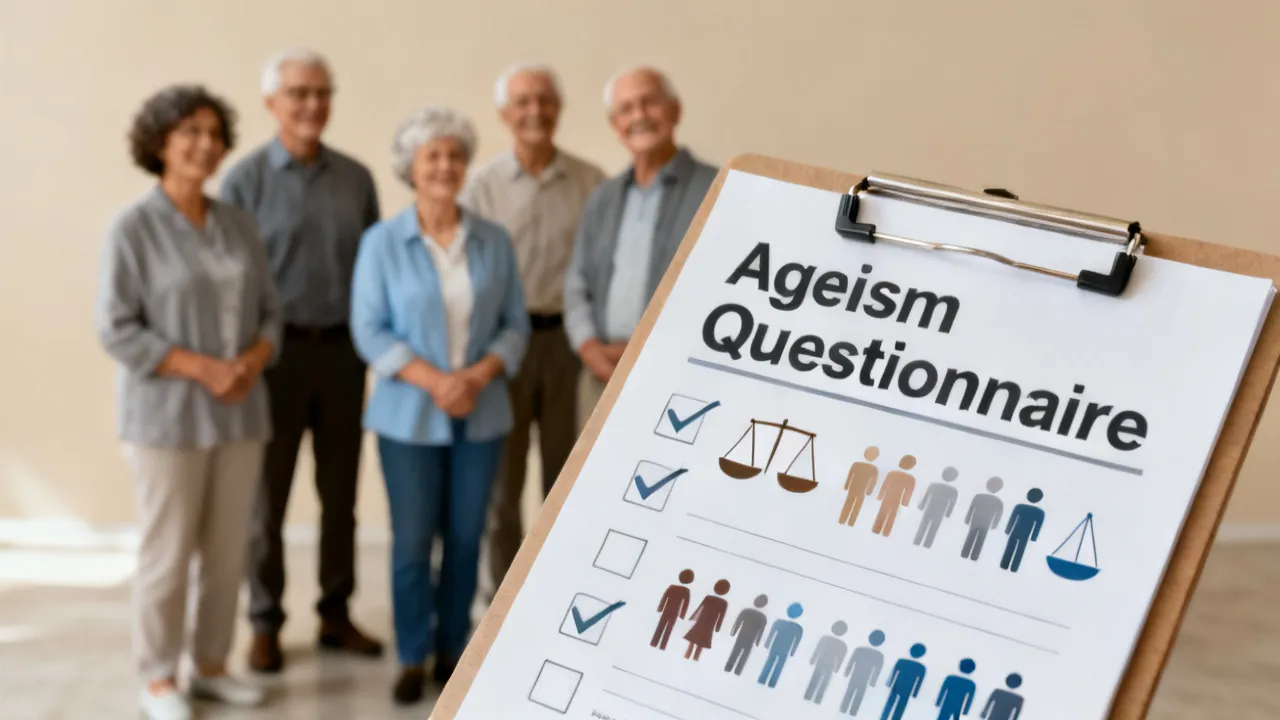
An Ageism Questionnaire is a structured assessment tool that helps organizations identify perceptions of age-based bias, map where it shows up in everyday work, and guide targeted interventions. The very practical approach is to treat the questionnaire as part of a broader governance process: define the purpose, choose validated item formats, protect confidentiality, analyze results responsibly, and connect findings to concrete policy and training actions.
From an industry-expert perspective, the value of an Ageism Questionnaire is not simply in collecting scores. Its real impact comes from how HR, legal, and leadership teams interpret results and translate them into operational changes—such as leadership communication norms, evaluation criteria, mentoring structures, career pathways, and manager capability building.
When used well, an Ageism Questionnaire can become an early-warning system. It helps organizations detect the kinds of subtle, everyday signals that often precede formal complaints—such as differential access to stretch opportunities, uneven feedback styles, or the assumption that someone is “too close to retirement” to be invested in. In many workplaces, the most damaging forms of age bias are not always dramatic; they are incremental, repeated, and normalized. A questionnaire helps organizations bring those patterns into the light while still maintaining a constructive, improvement-oriented tone.
However, this type of measurement is only effective if it’s operationalized. The questionnaire must be designed so it is credible to employees, interpreted carefully by decision-makers, and followed by action that is specific enough to change outcomes. If the organization collects data but fails to act, employees quickly learn that the survey is performative. Conversely, if the organization acts without credible analysis, it risks misdiagnosing the problem and taking actions that do not address the actual drivers of bias.
That “measure and act” principle is what separates a mature inclusion governance program from a one-off survey. The questionnaire becomes part of a cycle: assess → understand → prioritize → intervene → evaluate impact. Even if the first cycle produces mixed or incomplete results, repeating the assessment with improved items and stronger governance can generate cumulative organizational learning.
An Ageism Questionnaire typically measures perceived and reported experiences related to age-based stereotypes or differential treatment. In professional settings, these questionnaires may cover areas like:
To be useful, the questionnaire usually distinguishes between at least two concept types:
This distinction matters because many organizations mistakenly treat all “age bias feelings” as a single issue. In reality, employees may feel respected yet still perceive inequity in promotion or training access. Or they may perceive unequal access while also feeling socially included. Separating domains helps leadership prioritize interventions correctly.
However, an Ageism Questionnaire should not be treated as a “blame instrument” or as a substitute for legal investigation in individual cases. The tool works top as a workplace climate diagnostic and a basis for systemic improvements—rather than as proof that a specific person committed misconduct.
There are at least three reasons for this boundary:
Therefore, survey interpretation must remain grounded in governance and systems thinking. The questionnaire should inform process review, manager development, and policy refinement—not personal accusations.
At the same time, “not a blame tool” does not mean “ignore individual situations.” If an employee reports serious harm in a qualitative comment, the organization should have a parallel process for escalation consistent with its ethics, investigation, and hotline procedures. The questionnaire is a signal detector; it does not replace the reporting channels that handle individual allegations.
Organizations increasingly rely on structured assessments to reduce blind spots in HR practice. Age-based bias can be subtle: jokes that go unchallenged, assumptions about adaptability, or decision-making patterns that correlate with tenure or perceived “fit.” Because these issues often appear in daily interactions, employees’ perspectives can reveal patterns that external audits might miss.
Inclusion research has long emphasized that organizational culture is shaped by repeated behaviors and signals. Using questionnaires helps capture those signals from multiple employee groups, improving the chances that interventions address root drivers rather than symptoms.
There are also practical governance reasons businesses use questionnaires:
From an expert viewpoint, there’s another important factor: bias is often not recognized by people who benefit from it. A well-designed questionnaire can uncover the “silent normalization” of bias. For example, an organization may believe it has neutral performance standards, yet employees may experience performance conversations as uneven—such as corrective feedback delivered differently depending on perceived age. Without employee input, leaders may misinterpret conflict as personality differences or competence differences rather than potential bias patterns.
Ageism concerns typically surface across the employee lifecycle. Common pressure points include:
This “pressure point” framing is useful because it prevents the questionnaire from becoming abstract. Age bias is not only interpersonal; it often emerges at decision nodes where judgment is required. Examples of decision nodes include:
When an Ageism Questionnaire is designed well, it can pinpoint which of these areas employees perceive as very problematic—so interventions are prioritized instead of broad and unfocused.
Another useful way to interpret questionnaire results is the inverted pyramid logic: the system’s most impactful features are often at the top layer (leadership norms, policies, and decision criteria), while the lived experience is felt at the bottom layer (daily interactions, feedback, inclusion in projects). A mature program uses questionnaire results to connect those layers. It does not stop at “employees felt dismissed.” It asks: which policy or norm created the conditions for that feeling?
Industry practice supports a simple principle: a questionnaire must lead somewhere. After analysis, teams should connect findings to specific levers, such as:
Importantly, “what to do” should reflect your organizational realities. An Ageism Questionnaire reveals perceptions and patterns; leadership decisions should define acceptable changes, budgets where needed, and timelines.
To make action plans credible, organizations often build them using a few governance practices:
In practice, the action plan should include both “hard” and “soft” changes. “Hard” changes include documents, rubrics, process rules, and eligibility criteria. “Soft” changes include manager coaching, leadership norms, and dialogue structures. Age bias often thrives where both are missing—where processes are vague and where manager behaviors go unchecked.
For example, if the Ageism Questionnaire suggests concerns about access to development, a practical response may include standardized nomination processes for training and mentorship, plus manager coaching on equitable assignment. But it should also include a process audit to identify where nominations become informal. Perhaps nominations rely on manager discretion without clear criteria, or high-potential programs exclude employees due to assumptions about time horizon.
In my work with HR analytics and inclusion programs, three design/implementation factors consistently determine whether an Ageism Questionnaire improves culture or merely generates survey fatigue.
Measurement quality is more than selecting “good questions.” It also includes how items are framed:
Confidentiality should be treated like a governance system rather than a marketing claim. Even if the survey platform states “anonymous,” employees may not feel safe if:
Interpretability is equally critical. If the report shows a heatmap with colors but no definitions, leaders may overreact to noise. Instead, the report should present:
To support reliable implementation, organizations can refer to established measurement guidance and ethics principles commonly used in HR survey practices. Where possible, consult psychometric or survey methodology expertise to ensure items behave as intended.
In practical terms, one of the most effective improvements organizations can make is to pilot-test the questionnaire. A pilot helps validate that employees interpret items as intended, and it can uncover confusing language. It also helps calibrate response scales. When employees don’t understand the scale anchors (e.g., what “often” means in that context), the measurement becomes noisy, making it harder to track real changes over time.
Age-based discrimination is addressed in multiple jurisdictions through employment law and equal opportunity frameworks. Even when a specific legal regime differs, very compliance systems converge on the same operational themes: treat employees fairly in hiring, promotion, training, and evaluation; document decision criteria; and reduce bias-driven discretion.
For further context, the U.S. Equal Employment Opportunity Commission (EEOC) provides guidance on age discrimination under the Age Discrimination in Employment Act (ADEA). The EEOC also emphasizes prevention, training, and consistent practices. Source: EEOC — Age Discrimination guidance and resources. (Refer to official EEOC publications and employer guidance on age discrimination.)
Additionally, the World Health Organization (WHO) has discussed ageism as a public health and social issue, reinforcing that it can be both interpersonal and structural. Source: WHO — publications on ageism and related work.
Ethically, a questionnaire should be built with fairness principles. That includes respecting employees’ time, ensuring accessibility, protecting privacy, and using findings to improve systems. A mature organization also avoids weaponizing the tool—such as using survey results to justify layoffs or to deny opportunities. If leadership uses the survey to “prove” a business case that disadvantages a particular age cohort, trust collapses.
Even though this article focuses on governance and workplace climate, legal readiness matters. Aggregated survey evidence can support prevention efforts and training planning, but it is not a substitute for case-specific legal investigations. If organizations incorporate survey learnings into policy updates, they create defensible processes that reduce discrimination risk.
From a governance perspective, it can also be useful to document the questionnaire lifecycle: item development decisions, confidentiality protections, analysis plans, reporting thresholds, and action planning responsibilities. This internal documentation can support accountability and continuous improvement.
The section below provides a practical process for implementing an Ageism Questionnaire. It is framed to help organizations produce credible results and turn them into improvements rather than defensiveness.
Clarify what you will do with results before the questionnaire goes live. Examples of valid purposes include:
Avoid ambiguous purposes such as “testing whether discrimination exists.” Instead, focus on assessing perceptions and experiences related to fairness and respect.
To operationalize this step, it helps to translate the purpose into explicit decisions. For example:
Those “decision statements” help avoid survey ambivalence. Employees want to know that leadership has a real pathway to act, not just an intention to “learn.”
As an expert top practice, structure items around observable workplace dimensions. Common domains for an Ageism Questionnaire include:
Response scales should be consistent. Consistency helps interpret trends and reduces measurement noise.
When selecting response formats, organizations should consider:
A common implementation mistake is mixing scales in ways that confuse respondents. Another mistake is writing items that are too abstract. For example, “People treat me unfairly because of my age” may be emotionally accurate but not operational enough. A more actionable item might focus on a process: “I receive opportunities for high-visibility work in a way that feels fair, regardless of my age.”
It’s also helpful to include a small set of items that function as validity checks—items that distinguish respect, opportunity, and transparency. If employees score “respect and dignity” high but “decision transparency” low, leadership can target processes rather than assuming a broad interpersonal issue.
Even if the survey is anonymous, small groups can sometimes become identifiable. Plan analysis categories carefully. If your organization has fewer than a minimum number of employees in a subgroup, consider combining segments or reporting at higher aggregation levels.
In practice, anonymity depends on more than the survey platform. It also depends on how results are reported. If the report includes too many breakdowns—such as department plus job family plus age cohort—the organization may inadvertently identify individuals.
A responsible approach includes:
Additionally, the organization should consider how re-identification could happen through comments. Employees sometimes include unique details in free text. A best practice is to categorize comments and report themes rather than verbatim quotes when anonymity could be compromised.
Employees should understand:
Communication is not a formality. Poor messaging undermines trust and reduces response quality.
In mature organizations, communication includes at least three layers:
It can also be useful to set expectations about what employees can influence. For example: “We will use results to prioritize manager coaching and process clarity, and we will share aggregated themes by department.” This helps reduce cynicism.
One more communication practice is to train leaders on how to respond to employee questions. When leaders improvise or provide inconsistent assurances, trust erodes. A short briefing for executives and HR leaders can help ensure consistent messaging.
Analysis should include both quantitative summaries and interpretive context. For example:
Be cautious with small differences that may not be meaningful. If you report outcomes, use consistent baselines and note limitations.
Responsible analysis often requires several technical and governance steps:
Triangulation can include:
But triangulation must not become surveillance. If employees fear that survey responses directly increase scrutiny, participation decreases. Therefore, analysis should maintain privacy boundaries and focus on systemic patterns.
Translate results into an action plan with owners, milestones, and measurable outcomes. In practice, effective interventions often blend:
For example, if the Ageism Questionnaire suggests concerns about access to development, a practical response may include standardized nomination processes for training and mentorship, plus manager coaching on equitable assignment.
To improve intervention effectiveness, many organizations add an additional design step: select interventions that match the diagnosis. If the questionnaire shows low confidence in promotion criteria, then a training alone won’t fix it. A process redesign—such as publishing clear rubrics, standardizing calibration notes, and increasing decision transparency—will have greater impact.
Action plans also benefit from including “leading indicators” that can change sooner than survey results. Examples include:
Then, after a period (often 6–12 months), leadership can evaluate whether the survey results improve in the targeted domains.
Culture change takes time. Run the Ageism Questionnaire periodically, ideally with the same core items so you can track movement while allowing updates to supplemental questions.
Reassessment should include both stability and evolution:
Many organizations also schedule “mid-cycle check-ins” (short pulses) if changes are substantial. For example, if leadership updates performance management criteria mid-year, a brief follow-up pulse can detect whether employees understand the new criteria and whether manager behavior is changing.
The table below compares implementation components for an Ageism Questionnaire, followed by source references and conditions/requirements. (No links are included in the table, per your request.)
| Component | Recommended Practice | Source/Reference (Official or Authoritative) | Conditions / Requirements |
|---|---|---|---|
| Purpose definition | Specify what decisions the questionnaire will inform (e.g., policy review, manager training priorities) | EEOC employer guidance materials on fair employment practices and prevention | Document intended use; avoid punitive or individual blame framing |
| Content domains | Cover respect, fairness of opportunities, manager interactions, stereotype assumptions, and transparency | WHO discussions of ageism across social and structural domains (conceptual foundation) | Use clear, behavior-based language; avoid ambiguous claims |
| Confidentiality model | Use credible anonymity and aggregate reporting thresholds to reduce re-identification risk | General survey ethics principles used in HR measurement; organizational data handling standards | Set minimum subgroup sizes; define retention and access controls |
| Analysis approach | Report aggregated patterns and include context; interpret changes consistently over time | Standard HR analytics and survey methodology guidance used in professional practice | Avoid over-interpreting small differences; track baselines |
| Action planning | Create an implementation roadmap with owners, timelines, and measurable outcomes | EEOC prevention framing and workplace compliance top practices | Interventions should connect directly to identified domains |
| Follow-up measurement | Repeat the questionnaire on a consistent cadence to monitor progress | WHO and research-linked ageism work emphasizes sustained, systemic change | Use stable core items; supplement carefully |
An Ageism Questionnaire is a structured survey tool designed to assess employee perceptions and experiences related to age-based bias, stereotypes, or unfair treatment in workplace processes and daily interactions.
While many organizations also use interviews or focus groups, the questionnaire is often the starting point because it can scale across large organizations and produce consistent domain-level data. It helps identify where to allocate attention and which HR processes might require additional audit.
No. A questionnaire is generally used to understand organizational climate and patterns. It should not replace formal legal reporting processes or individual investigations when allegations arise.
Organizations should maintain separate pathways for individual complaints. The questionnaire may include optional qualitative comments; however, those comments should not be treated as case evidence. Instead, employees should be guided toward formal complaint channels if they want an investigation.
Many organizations choose an annual or semiannual cadence depending on change initiatives, but the key is consistency. If you update core items, track comparability and document changes in analysis.
Annual programs are common because they align with broader HR cycles (performance cycles, learning plans, and leadership reporting). Semiannual pulses may be appropriate when leadership makes major changes—such as redesigning promotion processes or launching new development programs—and wants faster feedback on whether employees experience those changes as fair.
In very maturity models, yes—at least at an aggregated level. Share themes, what you heard, and what actions you will take. If subgroup anonymity could be compromised, communicate at a higher level instead.
When sharing results, it helps to follow a “what you told us / what we’ll do / when you’ll see progress” structure. Employees are often more interested in actions than in exact scores. A governance approach that includes transparent timelines builds trust.
Use clear language, accessible survey design, and response options that are easy to interpret. Also, pilot test items to identify misunderstandings or uneven item interpretation.
Fairness can also be affected by digital accessibility. If the survey is only usable on certain devices, some employees may be less likely to complete it. For global organizations, language translation and cultural context also matter. A mature program supports multiple languages and uses review processes to ensure translations preserve the intended meaning of items.
That result can still be useful. Use it to validate your current practices, identify minor areas for refinement, and maintain manager capability and process consistency.
Even when scores are low (i.e., employees report few concerns), organizations should still review whether the domains and item design are functioning properly. Sometimes “no major concerns” can reflect effective governance. In other cases, it can reflect survey fatigue, low response rates, or items that do not capture the right experiences. That’s why measuring participation and interpreting response patterns responsibly matters.
The questionnaire is typically used to assess workplace climate and HR process perceptions. For hiring evaluations, combine it with process audits (e.g., selection criteria consistency, interview scoring rubrics) rather than using questionnaire scores directly.
A common pitfall is trying to use employee climate scores to evaluate a recruiter’s or manager’s performance. While survey findings can inform training needs, they should not become punitive metrics for individual decision-makers without careful, case-specific review and due process.
Keep the instrument focused, limit redundant questions, communicate purpose clearly, and show evidence that results lead to decisions. Consider rotating supplemental modules while keeping a stable core set for trend tracking.
Survey fatigue also has a behavioral component. If employees have submitted previous surveys and saw little action, adding another survey can reduce trust and participation. Therefore, fatigue prevention should include demonstrable follow-up—communication that shows leadership acted on prior results. Rotating supplemental items can also help keep the survey from becoming repetitive while still maintaining trend measurement through stable core items.
Start with a root-cause review of the domains with the strongest concerns, then assign owners and timelines for interventions. Avoid immediate punitive interpretations; focus on systematic improvements.
Root-cause review often includes asking structured questions such as:
Leaders also need to avoid reactive “fix the people” thinking. Ageism can persist even when teams are well-intentioned, because operational systems create unequal experiences. Root cause thinking directs leadership toward process alignment and manager capability.
Not necessarily. The questionnaire measures perceptions and experiences as reported by employees. High concern levels indicate areas requiring review, such as manager practices, process transparency, and opportunity equity.
Because the instrument measures perceptions, high scores should trigger a process review. The organization should ask what in workplace practice could plausibly generate those perceptions. That review can include qualitative follow-ups, audit of documentation practices, and assessment of decision consistency.
Analyze differences carefully and only when anonymity is maintained. Use role context and HR process differences to interpret patterns. When possible, triangulate with qualitative input (voluntary focus groups) to understand the “why.”
Departments can differ in staffing models, job requirements, and manager experience. Without context, department comparisons can lead to misinterpretation. A more responsible approach is to interpret differences as signals that may reflect operational differences. Then leadership can investigate the shared systems (e.g., performance review framework) that might be applied unevenly.
Typically, organizations share distributions, mean/median comparisons, and confidence intervals or significance tests where appropriate. If you’re not equipped, consult an analytics specialist to avoid misinterpretation.
For many HR audiences, the most helpful outputs are domain-level averages with clear definitions and trend lines. Complex significance testing can confuse stakeholders if not explained. When in doubt, present practical metrics (e.g., percentage of employees rating an item in the “concern” range) along with simple caveats about sample sizes.
Any survey has limitations, including response bias and sampling variability. Reporting should include a brief limitations statement—especially when numbers are small or participation is low.
Limitations reporting should be straightforward and not overly technical. Employees and leaders should understand that survey results provide directional insight rather than absolute proof. That clarity helps prevent overreaction and supports a continuous improvement culture.
Not always. Some organizations build internal capacity with HR analytics and survey design support. Others partner with specialist suppliers for survey tooling, item validation, or analysis. The key requirement is that governance and interpretation remain accountable to your organization.
External suppliers can add value in survey security, analytics dashboards, and methodological support. However, organizations should ensure that they can independently verify data governance details, such as how data is stored, how access is controlled, and what exports are possible. If employees do not trust the data handling, response rates may suffer.
Evaluate data privacy controls, accessibility, survey routing logic, export capabilities, audit trails, and how the supplier handles anonymized datasets. Also confirm whether they can support aggregated reporting and secure storage.
Due diligence should also include contract-level protections around:
Yes, but customize carefully. If you change core items too frequently, you may lose trend comparability. A common approach is to keep a stable core set and add a small “supplement” module each cycle.
Customization can be beneficial when your organization has unique operational contexts—for example, regulated roles, unionized work settings, or different hiring pathways. But core items should remain stable to enable longitudinal insight. When you add supplemental modules, document exactly why and how items were changed to interpret results responsibly.
Even the top-designed Ageism Questionnaire can underperform if governance is weak. The conditions below summarize what typically must be in place:
Leadership sponsorship is especially important. If senior leaders treat the report as optional reading, managers will not prioritize interventions. Accountability also must be supported through resourcing; otherwise, even the best-intentioned action plan will stall.
Data stewardship goes beyond privacy. It also includes integrity and documentation. Organizations should define who calculates scores, who controls access to results, how results are versioned, and what audit trail exists. This reduces the risk of errors and improves credibility.
Finally, consistent follow-up is the difference between a “survey program” and a “measurement program.” Surveys can be one-time events; measurement programs are continuous cycles with learning and adaptation.
Below are realistic scenarios showing how organizations often use an Ageism Questionnaire to guide action. These examples are illustrative and avoid exaggerated claims.
Employees report lower perceptions of fairness in access to training and mentoring. The action plan may include standardized nomination criteria for development programs, clearer communication of eligibility, and manager coaching on equitable allocation.
To make this scenario more operational, leadership might also examine the selection workflow:
Then the organization might track leading indicators such as the percentage of eligible employees participating, the diversity of nominees across tenure ranges, and whether managers meet a minimum standard for documented nomination rationale.
In some teams, employees report feedback practices that feel age-differentiated—for example, more corrective tone for one age group or assumptions about “speed.” Interventions could include manager training on bias-aware feedback and structured performance documentation.
A structured approach could involve:
Importantly, leadership should link training to specific process tools. If training remains generic (“be unbiased”), it may not change behavior. If training includes specific scripts and documentation standards, behavior change becomes more likely.
Employees report uncertainty about selection criteria and feel that “fit” judgments vary. Organizations may respond by reviewing job requirements for clarity, using consistent interview scoring rubrics, and ensuring hiring panels receive training on structured decision-making.
Recruitment transparency is often improved through concrete mechanisms:
These actions also reduce the risk that “fit” becomes a proxy for bias. The questionnaire helps identify where employees perceive the opacity; structured recruitment processes help address it.
A mature Ageism Questionnaire program treats measurement as one layer of a wider inclusion strategy. Workplace culture improves when day-to-day systems align with respect and fairness. Common cultural levers include:
Beyond culture levers, organizations often build sustainable inclusion through policy, process, and capability:
The questionnaire can identify where the culture is misaligned. But culture change happens when systems reinforce new behaviors. For example, if you train managers to be equitable but promotions remain subjective, employees will continue to perceive inequity. The questionnaire helps connect these dots by surfacing where perceptions persist.
Cross-age collaboration deserves special attention because it can either reinforce bias or counteract it. Unstructured mentoring programs might become tokenistic, while structured knowledge exchange can harness different strengths and experience. For example, a mature organization might create mentorship roles that are paired intentionally: early-career employees can mentor on digital tools or newer methodologies, while senior employees mentor on stakeholder management and institutional knowledge. When these pairings are systematic rather than informal, they can reduce stereotypes.
Recognition practices also affect inclusion. If recognition systems inadvertently prioritize speed, novelty, or “always-on availability,” they may disadvantage employees whose strengths lie in reliability, deep expertise, or longer-term contribution. Adjusting recognition criteria to value different contribution timelines can improve perceptions of fairness across age cohorts.
Use this checklist when reviewing draft items:
To expand the checklist into a more practical review workflow, organizations often add the following:
These quality checks can improve reliability and validity, which is essential if you want to track trends over multiple cycles.
Your request mentioned price information and supplier details, but none were provided. In practice, questionnaire costs vary widely depending on survey platform features, analytics support, translation requirements, and whether validation or consulting is included. If you share your budget range and region, I can outline a procurement-ready evaluation framework.
For objective procurement planning, focus on what you can verify:
Procurement evaluation can also include questions like:
Price is important, but it should not be the sole decision factor. A cheaper platform that cannot support governance and reporting thresholds may create risk and mistrust.
An Ageism Questionnaire can help organizations detect age-based bias patterns early, guide training and policy improvements, and demonstrate a commitment to fair treatment across the workforce. The strongest outcomes come when questionnaires are implemented with credible anonymity, analyzed responsibly, and followed by targeted, owned, time-bound interventions.
In short: measure perceptions, interpret with care, and act with consistency. That approach turns an Ageism Questionnaire from a data collection exercise into a practical pathway toward a more inclusive workplace culture.
When organizations adopt this approach, the questionnaire becomes more than a survey instrument—it becomes a governance mechanism for fairness. It creates a structured way to hear employees’ lived experiences, connect those experiences to workplace systems, and track progress over time. That is how age inclusion work becomes durable rather than episodic.
Finally, the most effective programs treat employees as partners in the change process. Employees are asked to share perceptions, leadership commits to action, and follow-up demonstrates progress. That relationship—trust reinforced through transparent measurement and consistent intervention—is what ultimately reduces bias and improves the everyday experience of work across age groups.
Striking the Perfect Balance: Navigating Premiums and Out-of-Pocket Expenses in Senior Insurance Plans

Explore the Tranquil Bliss of Idyllic Rural Retreats

How to Make Lasting Memories at Disneyland Attractions

Affordable Phones and Plans for Seniors

Affordable Full Mouth Dental Implants Near You

Unlock the Top Kept Secrets to Finding Your Ideal Dentist for Flawless Dental Implant Results!

Discovering Springdale Estates

Unveiling RS Sul Telecom Services

The Guide to Car Trading


Understanding Wrongful Repossession Claims
This guide delves into the complexities of wrongful repossession, a legal issue occurring when property is taken back without legal justification. Wrongful repossession can deeply affect individuals, leading to financial and emotional distress. This article explores the legal framework, common causes, and potential remedies for those affected by wrongful repossession, offering insights from legal experts.

Understanding Wrongful Repossession
Wrongful repossession occurs when a vehicle is taken back by a lender without proper legal authority or justification. This article delves into the intricacies of wrongful repossession, exploring its legal ramifications, the rights of the consumer, and the steps one can take if they find themselves a victim of this practice. By understanding these elements, individuals can better protect themselves and seek redress if necessary.

Understanding Wrongful Repossession
Wrongful repossession refers to the illegal seizure of property by a lender, typically due to a breach of contract. This article delves into the complexities of wrongful repossession, examining legal perspectives, consumer rights, and the processes involved. It aims to guide readers through their rights and the steps they can take if they believe they have been unjustly treated by a lender.
Understanding Wrongful Repossession
Wrongful repossession occurs when a vehicle is taken back by a lender without proper legal authority or justification. This article delves into the intricacies of wrongful repossession, exploring its legal ramifications, the rights of the consumer, and the steps one can take if they find themselves a victim of this practice. By understanding these elements, individuals can better protect themselves and seek redress if necessary.
Understanding Wrongful Repossession
Wrongful repossession refers to the illegal seizure of property by a lender, typically due to a breach of contract. This article delves into the complexities of wrongful repossession, examining legal perspectives, consumer rights, and the processes involved. It aims to guide readers through their rights and the steps they can take if they believe they have been unjustly treated by a lender.

Understanding Wrongful Repossession
Wrongful repossession occurs when a creditor unlawfully seizes a debtor's property, often due to errors or breaches in legal procedures. This article explores the complexities of wrongful repossession, its legal implications, and steps individuals can take to protect their rights. Highlighting the importance of understanding one's financial agreements and the legal framework surrounding repossession, this guide serves as a vital resource for affected individuals.
