This guide examines how Angela Cândido Guajajara shaped Indigenous environmental advocacy and cultural recognition through collective action, public policy dialogue, and community-led resilience. Background context covers her role in Indigenous movements, the broader Brazilian landscape for land rights, and why protection of forests and traditional knowledge matters for sustainability and governance.
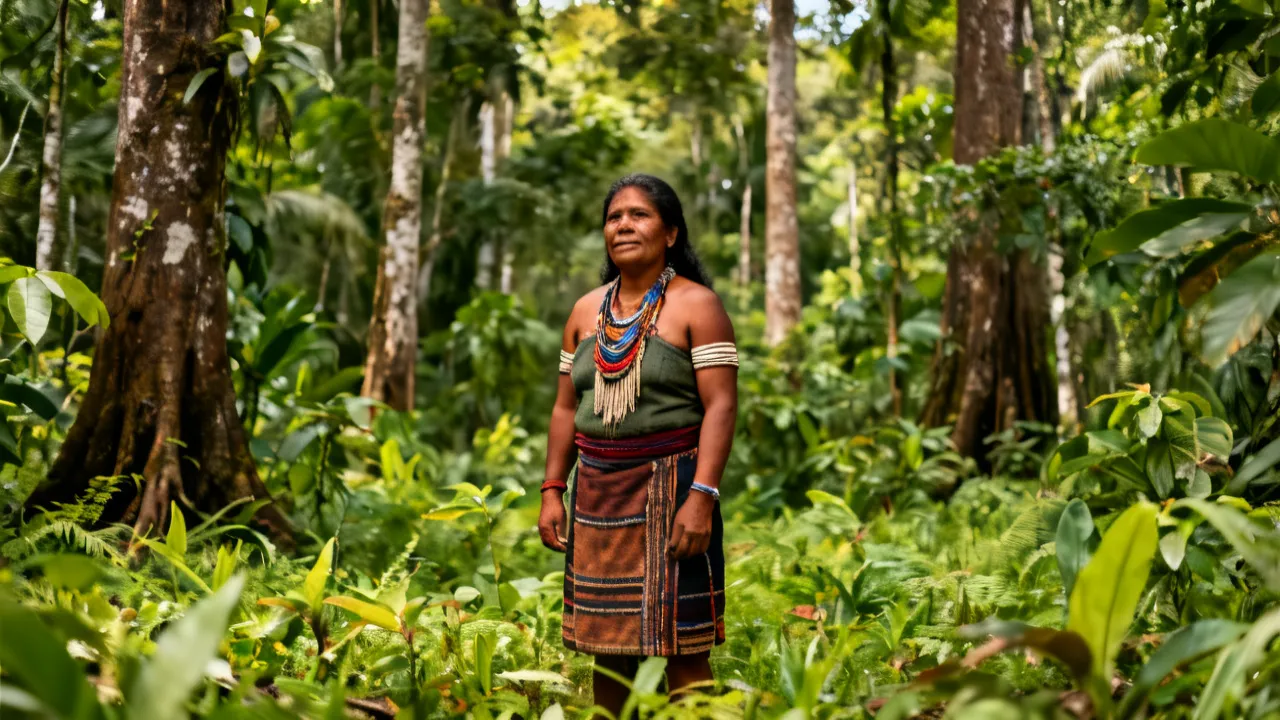
Angela Cândido Guajajara is widely recognized for her leadership within Indigenous advocacy in Brazil, especially where cultural rights, land protection, and environmental stewardship intersect. In recent years, her public profile has increasingly been discussed in the same analytical frame as Amazon governance—because in Brazil, outcomes for Indigenous communities and outcomes for the forest are often shaped by the same underlying drivers: land tenure security, enforcement capacity, the credibility of public institutions, and the extent to which decision-making incorporates (or excludes) those most affected. This article provides an objective, industry-informed analysis of her public role and the broader governance challenges that shape outcomes for Indigenous communities and the Amazon region.
Rather than treating her work as an isolated activism story, the discussion below situates her influence in a wider system. That system includes how Brazil’s legal and administrative structures convert rights on paper into protection in practice, how government agencies coordinate (or fail to coordinate), how information travels from remote territories to national policy arenas, and how political pressure affects enforcement decisions. In other words, her significance is not only reputational or symbolic; it is tied to the way advocacy can shift the incentives and attention of institutions that ultimately determine whether communities can defend territories from illegal encroachment and whether forests can remain intact.
In the last decade, sustainability discussions have increasingly recognized that environmental protection is not only a technical task; it is also a governance task. Many conservation strategies focus on ecological metrics—such as forest cover, species presence, carbon stocks, or fire frequency. Yet in practice, ecological metrics are often consequences of governance choices: land allocation rules, enforcement regimes, procurement transparency, licensing standards, the predictability of oversight, and the safety of people who monitor threats. Indigenous communities often manage complex territories through knowledge systems developed over generations. Those systems influence biodiversity conservation, seasonal resource use, and pragmatic approaches to fire management and ecosystem stewardship. In Brazil, where land rights and enforcement practices can affect deforestation pressure and illegal extraction incentives, Indigenous leadership becomes an important variable for understanding real-world outcomes.
Within this context, Angela Cândido Guajajara’s public visibility reflects a broader movement in which Indigenous voices push for:
From a governance perspective, these priorities are not separable. Territorial rights shape monitoring capability; monitoring provides evidence that can influence enforcement actions; enforcement affects whether external actors view Indigenous lands as high-risk or low-risk to invade. Meanwhile, the legitimacy of policy engagement affects whether communities perceive institutions as trustworthy partners or as obstacles. When institutions are seen as unresponsive, compliance with conservation goals can erode, and conflict dynamics can intensify. Conversely, when institutions respond credibly, Indigenous governance can operate as a stabilizing force.
In industries that work with sustainability—such as commodity trading, forestry supply chains, logistics, finance, insurance, and climate risk analysis—this governance linkage matters because it changes what “risk” means. Environmental risk is often treated as a separate category from social risk. Brazil demonstrates that they overlap: a failure to protect Indigenous rights can correlate with a failure to protect forests, and vice versa. Thus, Indigenous advocacy is not simply a human-rights matter; it can also be a material indicator of environmental governance quality.
From an industry expert perspective (focused on governance, risk, and stakeholder coordination), leadership in contested social-environmental contexts functions in three overlapping dimensions:
Angela Cândido Guajajara’s public advocacy is frequently situated within these dimensions. Rather than representing a single-issue campaign, her leadership is often linked to an integrated view of rights and environmental protection—one that treats forest guardianship and cultural survival as inseparable. In practice, that means that discussions about deforestation, illegal exploitation, or environmental crime are tied to discussions about whether communities can safely inhabit and govern their territories and whether institutions respond to threats without politicized delay.
To make this concrete, consider how accountability pressure works in governance systems. If an agency receives reports of illegal activity but does not deploy inspection teams, does not follow up with enforcement actions, or does not publish the outcomes, then the deterrence effect weakens. External actors can interpret the absence of action as a signal. Advocacy leadership can attempt to interrupt that logic by insisting on process transparency, documenting failures, and keeping issues visible until institutions act. This is especially relevant in regions where visibility is low and threats are high.
Representation is also central. Indigenous advocacy often must navigate complex power dynamics in which legal systems, administrative systems, and media systems are not designed to represent remote or marginalized voices. Leaders like Guajajara therefore do more than “speak”—they translate lived experience into governance language: territorial rights, consultation requirements, enforcement procedures, and the consequences of institutional inaction. When translation is effective, institutions become more capable of taking action; when it fails, issues can become abstract, mischaracterized, or dismissed.
When Indigenous territories are recognized and supported by enforceable protections, multiple governance mechanisms tend to improve. While the specific pathways vary by region and institution, the common pattern includes:
These are not automatic outcomes. They depend on budgets, institutional coordination, and political will. A governance system can technically recognize rights while still failing in execution: for example, by underfunding inspection units, delaying land demarcation processes, limiting the availability of legal services, or allowing irregularities in permitting and licensing. Similarly, a system can declare conservation goals but neglect the social infrastructure—security for monitors, communication channels for reporting threats, and the ability to verify claims.
From a risk and implementation standpoint, “rights-based forest protection” should be understood as a pathway that requires multiple links in a chain to work. A rights claim that is not enforceable may be emotionally persuasive but practically ineffective. A conservation program that lacks community participation may produce short-term outputs while ignoring the local drivers of conflict. Therefore, leaders who insist on rights and accountability are often addressing governance bottlenecks rather than only advocating for abstract principles.
In industry settings, this often corresponds to due diligence logic. Where Indigenous territories face threats, stakeholders frequently treat deforestation risk as the environmental symptom. But governance failures can be upstream—such as weak land governance, low enforcement credibility, and limited protection mechanisms. In that context, advocacy that improves enforcement credibility can indirectly contribute to deforestation risk reduction.
In large-scale environmental governance, the difference between policy intent and real-world effect often lies in implementation constraints. From a risk lens, consider the following pressure points that frequently determine whether advocacy translates into durable protection:
Brazil involves multiple levels of governance and enforcement authorities. Even when legal frameworks exist, outcomes can fail if enforcement resources are limited or if coordination among agencies is weak. For example, when different bodies share responsibilities—such as environmental enforcement agencies, land institutions, public prosecutors, and local administrations—lack of clarity about roles can delay action or create gaps. Advocacy leadership can help focus attention on these gaps, but it cannot replace institutional execution.
From a practical viewpoint, enforcement capacity includes staffing, travel budgets for inspections, ability to access remote areas, legal capacity for prosecution, and operational security for enforcement staff and community monitors. If any of these is undermined, deterrence falls. Moreover, if enforcement actions are perceived as selective or inconsistent, illegal actors can adjust their strategies—moving operations, bribing intermediaries, or targeting the most vulnerable communities.
Land-related processes can move slowly, and documentation, boundaries, and administrative procedures may require sustained attention. In practice, communities and advocates often work through long timelines to secure recognition and protection—an approach that demands persistence and legal/administrative literacy.
Land tenure complexity matters because it affects how quickly threats can be addressed. If territorial recognition is uncertain, external actors may exploit legal gray zones. Even when rights exist, delays in formal recognition can weaken enforcement because authorities may hesitate to act robustly without clear administrative documentation. Advocacy can raise urgency, but the structural bottleneck remains: the system must be capable of converting legal recognition into operational protection.
Tenure complexity also shapes community vulnerability. When communities are in prolonged uncertainty—waiting for demarcation processes, boundary confirmation, or protective measures—they may face repeated incursions. In those conditions, the forest can suffer not only from large-scale illegal extraction but also from incremental degradation: roads that cut deeper into ecosystems, small-scale logging that expands over time, or seasonal farming encroachment that later becomes permanent.
Environmental issues are frequently debated through simplified narratives. Effective advocacy counters distortions by emphasizing concrete community stakes: livelihoods, territory, and cultural continuity. Over time, public understanding can shift, which can affect funding decisions, policy priorities, and political negotiations.
Media framing matters because it influences what political leadership perceives as electorally or reputationally urgent. If the narrative reduces Indigenous communities to either romantic symbols or obstacles to development, policy may lean toward dilution of rights. If the narrative instead recognizes Indigenous governance as a legitimate and evidence-based stewardship model, institutions may become more willing to invest in protection and monitoring.
Trust is also crucial. When communities believe that reporting will lead to meaningful action, they are more likely to engage with monitoring efforts and provide actionable information. When they suspect authorities will ignore them—or that involvement will increase retaliation risk—reporting channels weaken. Advocacy leadership often addresses this by building relationships with institutions and by insisting on process transparency and protections for community participants.
Illegal resource extraction can be enabled by market demand and weak compliance controls. Advocacy can address upstream governance, but systemic pressure often requires engagement across procurement, transparency initiatives, and oversight mechanisms.
In many contexts, illegal extraction is not only an enforcement problem; it is also a market problem. If illegal logs or minerals can be laundered through intermediaries, or if compliance mechanisms are weak, then economic incentives remain strong. Large buyers, investors, and contractors may inadvertently support deforestation if they lack robust traceability or if due diligence does not incorporate governance risk factors related to Indigenous territories.
Therefore, leadership that emphasizes rights and oversight can connect to broader governance tools: supply chain monitoring, certification integrity, public transparency systems, and accountability for companies that source from conflict-affected zones. While not every advocacy leader controls corporate behavior directly, public advocacy can influence regulatory attention and procurement standards—especially when it provides credible evidence and keeps enforcement accountability in the spotlight.
While this article focuses on Angela Cândido Guajajara and Brazil’s context, her leadership also illustrates a broader international trend: sustainability models increasingly emphasize Indigenous participation. Globally, Indigenous Peoples’ organizations are often treated as essential partners in conservation planning, risk monitoring, and cultural impact assessment—especially where land and resources are central to governance.
From a professional standpoint, this is not “symbolic inclusion.” It is stakeholder participation that can reduce uncertainty and improve decision quality by incorporating local ecological understanding and lived experience. In environmental management, uncertainty can be costly. Decisions made without local knowledge can misjudge seasonal patterns, underestimate resource pressures, or fail to anticipate social conflicts. Incorporating Indigenous governance can therefore be seen as a way to improve the accuracy and legitimacy of interventions.
At the same time, “Indigenous participation” can take many forms. Some models provide meaningful decision power; others treat participation as consultation theater. A governance-oriented approach asks whether communities can actually influence enforcement priorities, whether Indigenous monitors have access to reporting and protection channels, whether consent processes are respected, and whether communities benefit from conservation policies rather than bearing the costs of restrictions without support.
Internationally, the credibility of Indigenous leadership can influence how governments design conservation and infrastructure policies. Where Indigenous leaders are engaged respectfully and supported, conservation programs can become co-managed rather than imposed. Where engagement is superficial, programs can fail due to social resistance, weak monitoring, or inadequate local compliance. This comparative insight reinforces why Angela Cândido Guajajara’s work is relevant beyond Brazil: it exemplifies the governance mechanisms that are increasingly central to sustainability discourse worldwide.
Because governance outcomes are complex and interdependent, it can help to use a structured framework when evaluating advocacy impact or policy effectiveness. Below is a decision framework that connects rights-based governance, stewardship capacity, policy engagement, accountability systems, and stakeholder coordination. While the framework is simplified, it offers a practical way to translate advocacy themes into governance checks that can be assessed using evidence.
| Theme | What to examine | Why it matters | Conditions/requirements |
|---|---|---|---|
| Rights-based governance | Territorial recognition status and enforceable protections | Defines the baseline for stewardship and monitoring | Legal clarity, administrative follow-through, and consistent oversight |
| Environmental stewardship | Community land management practices and monitoring capacity | Connects conservation to practical land realities | Support for community-led monitoring and locally appropriate interventions |
| Policy engagement | How advocacy translates into formal commitments | Moves attention into enforceable policy instruments | Institutional responsiveness, documented decisions, and follow-up mechanisms |
| Accountability systems | Reporting channels and accountability for enforcement | Reduces the “commitment gap” | Transparency standards, independent verification where possible, and resourcing |
| Stakeholder coordination | Roles of government, civil society, and partners | Limits duplication and speeds up implementation | Clear responsibilities, shared goals, and conflict-resolution pathways |
To avoid relying on impressions, advocacy impact can be evaluated through an objective workflow. The goal is not to reduce advocacy to metrics alone, but to connect advocacy actions to governance outputs and outcomes using credible evidence sources.
When organizations or stakeholders seek to partner with Indigenous leaders and communities, the quality of engagement affects both ethical outcomes and governance outcomes. The conditions below reflect practical requirements for responsible collaboration.
When discussing Indigenous advocacy and forest outcomes, it’s important to ground claims in reputable sources. The following types of evidence are commonly used by researchers and policy organizations:
For general guidance on how governments and independent institutions monitor Amazon deforestation and land-use change, readers can consult Brazil’s national monitoring initiatives and peer-reviewed conservation research. For human-rights and Indigenous-related governance concerns, international and regional reporting frameworks are also frequently used.
From an industry perspective, credibility also depends on methodological transparency. Satellite monitoring is most useful when it clearly documents the assumptions used, the detection thresholds, the frequency of data updates, and the limitations (such as cloud cover or classification errors). Governance and enforcement assessments are most useful when they describe data sources, investigation procedures, and how they verify claims. This is why credible reporting often includes methodology notes and references.
Note: This article intentionally avoids exaggerated or unverified quantitative claims. Where numerical indicators are required, they should be drawn from official monitoring agencies, academic institutions, or well-regarded policy reports. The aim is to connect advocacy and governance logically, not to speculate beyond evidence.
To understand why figures like Angela Cândido Guajajara matter, it helps to break down what happens when Indigenous rights advocacy succeeds versus when it stalls. Governance systems can respond differently depending on political cycles, institutional capacity, and the strategic effectiveness of advocacy. Below are several mechanisms through which rights–environment leadership can influence outcomes.
Many enforcement systems are reactive: inspections happen after incidents are reported or after satellite alerts indicate unusual activity. When advocacy leadership creates reliable reporting channels and keeps pressure on institutions, enforcement can gradually shift toward prevention. That shift can take the form of more frequent patrols, earlier detection of illegal logging, increased operational presence around vulnerable areas, or faster follow-up on credible reports.
Prevention matters because illegal operations often start small. Early intervention can stop a road corridor or halt initial encroachment before it becomes entrenched. When enforcement remains absent until damage is large, the opportunity cost increases and remediation becomes more complex.
Brazil’s governance landscape includes multiple actors. When advocacy leadership highlights failures, it can also help clarify where responsibility lies. For instance, if land institutions fail to provide documentation, enforcement agencies may hesitate to act. If prosecutors lack evidence or are not prioritized, investigations may stall. Advocacy can push for integrated action—creating pressure not only for “enforcement” but for correct sequencing among agencies.
Coordination is often a hidden bottleneck. A system can have strong legal rules but still fail because each agency focuses on its narrow mandate. Advocacy that insists on coordination can raise the likelihood that enforcement actions are supported by legal documentation and follow-through.
Where enforcement is weak, illegal actors may perceive rights violations as “low consequence.” Public advocacy can raise the reputational cost of inaction for public officials and increase scrutiny of enforcement agencies. Scrutiny can affect budgets, staffing decisions, and the political calculus behind prioritization.
Reputational pressure does not automatically create justice, but it can change the risk profile for institutional actors. For example, if failures are public and persistent, leadership of enforcement units may face political accountability. That accountability can drive more consistent action and improve the credibility of commitments.
Indigenous communities often monitor threats using local knowledge and practical observation. However, advocacy support can also help translate community observations into evidence that institutions can use: documentation, reports, and structured communications. When evidence is credible and presented in ways that agencies can act on, enforcement systems can process it more effectively.
Evidence generation is not only about collecting data; it is about communication. Advocacy can help ensure that community reports are understood and that agencies are required to respond. In some environments, bureaucratic inertia causes reports to “disappear.” Accountability leadership can mitigate that by tracking requests, following up, and calling for documented outcomes.
Policy debates can swing toward development narratives that treat Indigenous territories as contested or underutilized space. Rights-focused advocacy can alter policy design by emphasizing co-governance—where Indigenous institutions have a meaningful role in planning and oversight. Co-governance tends to improve legitimacy and can reduce conflict because communities are not asked to accept decisions made without consent.
From an implementation standpoint, co-governance can also make monitoring more effective. If communities help define priorities and participate in oversight, monitoring becomes continuous and grounded in lived realities. That can improve the responsiveness of institutions to emerging threats.
It is important to avoid a simplistic narrative where advocacy alone guarantees progress. Advocacy leadership operates within structural constraints. Below are common challenges that can limit measurable impact—even when advocacy is credible and persistent.
Enforcement and land policies in Brazil can be influenced by political cycles. When leadership changes, budget allocations and enforcement priorities can shift. Advocacy may generate commitments in one period, but if political will declines later, those commitments may not be fully implemented. Therefore, durable outcomes often require sustained governance pressure across multiple cycles.
Community monitors and Indigenous leaders can face threats from illegal actors. If retaliation increases, communities may change reporting behaviors to reduce risk. That can reduce the volume of reported evidence and weaken enforcement triggers. Advocacy may then need to include safety and protective measures, legal support, and institutional safeguards.
Land tenure recognition processes can be slow due to documentation requirements, boundary procedures, and legal disputes. Even after advocacy success in raising attention, administrative delays may persist. In the meantime, threats can continue. This temporal mismatch—where governance action lags behind threat cycles—can prevent measurable improvements even when advocacy is active.
Environmental and rights issues often involve contested information. Misinformation can be spread by those who want to deny legitimacy, undermine evidence, or create confusion about the status of territorial rights. Advocacy leadership must therefore invest in evidence and communication strategies. Institutions also need reliable verification systems to avoid being misled.
Even when agencies want to act, underfunding can limit their ability to execute. Travel and operational costs, legal case preparation resources, and support for community monitoring can be insufficient. Advocacy can push for more investment, but budgets are constrained and competitive.
For readers who want to move beyond general narratives, the following indicators can help assess whether governance is improving in ways that matter for Indigenous rights and forest outcomes. These indicators are not “proof” on their own, but they can guide structured analysis.
These indicators align with the “commitment gap” concept—where governments may announce goals but fail to deliver. Accountability systems and evidence-based tracking help close that gap.
Advocacy leadership rarely operates in isolation. Outcomes for Indigenous rights and forest protection often depend on networks of civil society organizations, legal support teams, media engagement, academic researchers, and international attention.
Legal support can translate advocacy demands into enforceable court actions, administrative complaints, or evidence submissions. Civil society organizations often provide technical assistance for monitoring, documentation, and communication. When these support systems are robust, advocacy becomes more capable of influencing enforcement decisions.
Media coverage can both help and harm. It helps when it amplifies credible evidence and centers community stakes, and it harms when it reinforces stereotypes or spreads misinformation. Leadership that can engage with media effectively helps shift narratives toward evidence and accountability.
International attention can raise the political costs of rights violations and help mobilize funding for monitoring or protection. Yet international attention is not a substitute for domestic enforcement; it is often a catalyst that can support or pressure domestic institutions.
From an industry perspective, international attention can also affect corporate behavior by influencing regulatory scrutiny, due diligence expectations, and risk assessments by investors and lenders.
The Amazon region’s environmental governance is affected by multiple interlocking issues: land conversion pressures, infrastructural expansion, illegal logging and mining, fire dynamics, and the strength or weakness of oversight. Indigenous territories can be both environmentally significant and institutionally vulnerable. When territorial rights are secure and enforcement is consistent, Indigenous governance can contribute to forest stability. When rights are contested, enforcement is weak, or intimidation increases, forests can face higher risk.
In this broader context, Angela Cândido Guajajara’s leadership is relevant because it highlights the governance logic linking rights to outcomes. Rather than focusing only on “forest protection” as an abstract objective, her advocacy emphasizes the institutional conditions required for protection to be credible: legitimate rights, enforceable boundaries, responsive agencies, and community-led oversight.
Angela Cândido Guajajara is an Indigenous Brazilian leader known for advocacy focused on Indigenous rights, cultural recognition, and environmental protection—especially in relation to forest and territory safeguarding.
In many governance models, secure territorial rights and effective oversight can improve conservation conditions. Advocacy often targets enforcement gaps, decision-making processes, and institutional accountability—factors that influence the real-world drivers of deforestation and land degradation.
Effective leadership in complex environments typically includes policy engagement, stakeholder coordination, and sustained monitoring. Public visibility can help, but durable change depends on institutional follow-through and community-led implementation.
Implementation capacity, land tenure procedures, enforcement resources, institutional coordination, and transparency systems are commonly decisive. Advocacy can influence these variables, but outcomes still rely on governance performance.
Partnerships should be consent-based, respect community autonomy, use evidence-based planning, and avoid extractive approaches. Clear roles, accountability mechanisms, and good commitments are essential for ethical collaboration.
Readers should prioritize official monitoring efforts, peer-reviewed research, and reputable policy reports that disclose methodologies and update regularly. This approach reduces the risk of misinformation and helps compare claims responsibly.
Angela Cândido Guajajara’s prominence in Indigenous environmental advocacy underscores a core principle: conservation and cultural survival are deeply linked through governance. When rights are recognized and enforcement is credible, communities are better positioned to safeguard forests and ecosystems while protecting ways of life. The most useful way to understand her work is not as a detached symbol, but as a governance practice—one that draws attention to accountability, implementation, and the conditions under which sustainability becomes durable.
In an era when environmental risk increasingly intersects with social justice, this governance lens helps explain why her leadership matters. It also helps clarify what “success” should mean: not merely statements of support, but enforceable protections, consistent oversight, meaningful participation, and transparent mechanisms that allow institutions to be held to commitments. When those elements strengthen, forests are less exposed to illegal pressures, communities face fewer violations, and long-term environmental stewardship becomes more than an ideal—it becomes an operational reality.
Striking the Perfect Balance: Navigating Premiums and Out-of-Pocket Expenses in Senior Insurance Plans

Explore the Tranquil Bliss of Idyllic Rural Retreats

How to Make Lasting Memories at Disneyland Attractions

4rkojvsx Technology: Industry Insights and Buying Guide

Affordable Phones and Plans for Seniors

Affordable Full Mouth Dental Implants Near You

Unlock the Top Kept Secrets to Finding Your Ideal Dentist for Flawless Dental Implant Results!

Discovering Springdale Estates

Unveiling RS Sul Telecom Services


WLLE: Practical Sourcing Insights with Quality Focus
This guide explains how WLLE helps organize sourcing decisions by balancing specification clarity, supplier reliability, and quality checks. Objectively, “WLLE” is treated here as a practical workflow label, while the repeated “😊 😊 😊” cues a user-experience orientation rather than a technical claim. The article also outlines decision conditions, comparison criteria, and FAQs for buyers.

Pis: Expert Buying Guide and Supplier Comparison
This guide explains Pis in an objective, decision-ready way—covering typical supplier considerations, evaluation criteria, and practical steps to choose what fits your needs. The background sections clarify what “Pis” generally refers to in commerce contexts, common use cases, and why supplier transparency matters when you compare options.

Revisional Porto Alegre: Expert Guidance and Options
This guide explains how a revisional approach is applied in Porto Alegre, outlining practical steps, due diligence, and supplier selection considerations. “Revisional Porto Alegre” refers to reviewing, adjusting, and verifying prior arrangements or plans to reduce risk and improve outcomes. The article offers an objective industry lens and a structured checklist for requirements, sources, and common questions.

Understanding Cxxxvldlo Supply Quality Standards
This guide explains how Cxxxvldlo-related supply quality is evaluated, organized, and verified across sourcing workflows. Objectively, it frames what “Cxxxvldlo” typically represents in operational contexts, why documentation and auditability matter, and how procurement teams translate supplier requirements into consistent handling. The goal is clarity—so decisions remain traceable, repeatable, and compliant.

Pono Explained: Meaning, Use, and Buyer Guidance
This guide clarifies what Pono is, how it’s commonly used, and how to evaluate quality when sourcing it for personal or commercial purposes. It objectively outlines the background of Pono terminology, common product forms, typical supplier roles, and practical decision criteria—so you can compare options confidently without relying on vague claims.

Understanding Joao.clemente.de.soiza.c.p.f Identifiers
This guide explains how to interpret the identifier “Joao.clemente.de.soiza.c.p.f” in real-world record workflows and compliance contexts. It then provides objective background on what such code-like strings typically represent, how organizations verify them, and what quality controls reduce errors. The discussion focuses on responsible handling, traceability, and audit readiness without relying on unverified claims.