This guide explains how to use an Ageism Questionnaire to identify age bias risks and improve fairness in organizations. It describes what ageism means, why measurement matters, and how questionnaires can be designed and interpreted with care. It also sets out practical conditions for implementation and compares common approaches objectively.
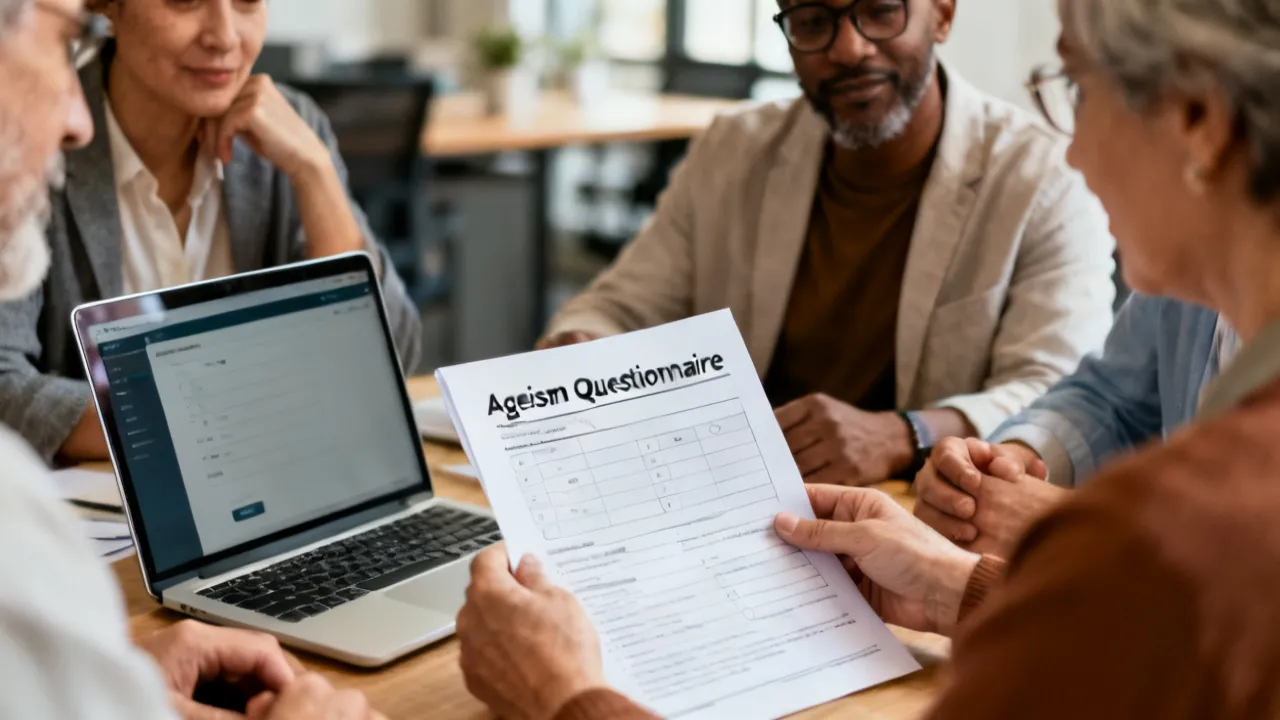
An Ageism Questionnaire is a structured tool used to surface perceptions and experiences related to age-based bias in organizations. When implemented thoughtfully, it helps decision-makers detect patterns early, document workplace climate, and design targeted interventions—without relying on rumors or assumptions. At the very practical level, it supports evidence-based discussions around recruitment, promotion, training, performance evaluation, and everyday interactions across age groups.
From an expert perspective, the central value of an Ageism Questionnaire is not simply “collecting opinions.” It is creating a consistent way to ask the same kinds of questions of the same kinds of respondents, then translating results into actionable policies, manager training, and accountability mechanisms. Done well, it becomes a decision-support asset for HR, ethics teams, and leaders responsible for inclusion.
Workplace fairness is rarely harmed by a single dramatic incident. More often, unfairness accumulates through repetitive, small decisions: who gets coached versus criticized, who is trusted with customer-facing work, who is invited to participate in strategic meetings, whose learning time is protected, and how feedback is delivered when performance goals aren’t met. An Ageism Questionnaire helps organizations examine those patterns—across time, locations, teams, and job families—so that fairness efforts do not depend solely on individual complaints or high-profile cases.
Additionally, ageism can be especially difficult to address without measurement because it frequently lives in assumptions. Managers may sincerely believe they are being “practical” or “supportive” when they recommend different training resources, offer different levels of autonomy, or assume that someone “won’t be comfortable” with new systems. Employees may experience these behaviors as exclusion, lowered expectations, or disrespect—sometimes even when the words used appear neutral. A survey structure gives organizations a channel for capturing those experiences in a consistent, comparable way.
Finally, there is a strategic reason organizations benefit from an Ageism Questionnaire: it enables constructive dialogue. When results are shared responsibly, the conversation can shift from blame to learning. Instead of asking, “Who is biased?” teams can ask, “What workplace systems create biased outcomes, even unintentionally?” That question is more productive and more actionable.
Ageism refers to stereotypes, prejudice, or discriminatory behaviors directed toward someone because of their age (or perceived age). In workplaces, ageism can show up in subtle forms—such as assuming younger employees are less reliable, or assuming older employees are less adaptable or less likely to use new tools. It can also appear in process outcomes, such as who is invited to high-visibility assignments, how performance feedback is framed, or whose development plans get funded.
Importantly, ageism is not limited to one side of the age spectrum. Many organizations encounter bias from both younger and older colleagues, and from managers whose expectations—often unexamined—shape day-to-day decisions.
To understand where it appears, it helps to treat ageism as a set of workplace mechanisms rather than a single attitude. Those mechanisms include:
Ageism can also involve intersectionality—age bias interacting with other identity factors such as race, gender, disability, caregiving status, immigration background, or socioeconomic constraints. For instance, older employees who are caregivers might be perceived differently, or younger employees from certain backgrounds might be dismissed due to stereotypes that combine age with other biases. A good Ageism Questionnaire should therefore avoid simplistic interpretations and should encourage careful segmentation and triangulation.
Additionally, ageism is not always intentional. A manager may believe they are protecting people from stress by limiting responsibilities or reducing exposure to high-impact projects. Even when well-meant, those actions can still produce unfair outcomes. That is why perceptions and experiences are central data sources for early detection.
An Ageism Questionnaire is useful because workplace bias is often inconsistent, situational, and influenced by context. A questionnaire gives you a standardized method to assess patterns across departments, roles, and reporting lines.
However, it’s equally important to be objective about limitations. A questionnaire cannot prove discriminatory intent on its own. It captures perceptions and reported experiences, which are still valuable, but should be interpreted with appropriate methodological rigor. When results are used responsibly, they can guide investigations, training priorities, and policy revisions. When used carelessly, they can lead to scapegoating or “data theater.”
Measurement is powerful, but it must be handled like evidence—not like verdict. That means:
When those constraints are acknowledged, an Ageism Questionnaire becomes a credible early-warning system. It can guide deeper inquiries, including structured qualitative follow-up, HR audits of decision processes, and evaluation of whether policies operate consistently across age groups.
It’s also worth noting that some organizations avoid measurement because of fear of reputational damage. A well-governed survey reduces that risk by emphasizing confidentiality, fairness, and responsible use of information. Transparency about the intent—learning and improving—can build trust.
Design quality determines whether an Ageism Questionnaire becomes a credible diagnostic instrument or a vague opinion poll. Industry top practice emphasizes clarity, fairness, and methodological transparency.
Designing for credibility requires attention to both psychological and operational factors. Employees must understand what is being asked, feel safe answering honestly, and trust that responses will not be used against them. Leaders must understand what the results mean and what actions follow.
Design quality is also about construct validity: the questionnaire should measure “age-related bias and its workplace manifestations” rather than generalized satisfaction or general frustration. The items need to be grounded in observable workplace experiences that can plausibly be influenced by age stereotypes.
Key expert considerations include:
In addition to the core design issues above, several deeper technical considerations often matter:
For validation and reliability, organizations often adapt instruments based on established survey practices. If you use a third-party instrument, review licensing terms and confirm whether the tool has documented psychometric evaluation (e.g., reliability metrics). If you develop in-house, consider pilot testing and expert review.
Pilot testing should not only check comprehension; it should also check whether the items produce meaningful variance—meaning employees can distinguish between levels of agreement—and whether different age groups interpret items similarly.
Once you deploy an Ageism Questionnaire, the work shifts from measurement to interpretation. A professional approach includes:
Interpretation becomes more robust when the organization uses a logic model. A logic model is a structured way to connect survey findings to hypotheses about workplace mechanisms. For instance:
With hypotheses in hand, leaders can plan targeted inquiries rather than generic interventions. This is where measurement becomes a driver of operational fairness.
There is also an important communication component: how results are framed. The organization should avoid describing results in a way that implies wrongdoing by particular demographic groups or individual managers. Instead, results should be framed as signals for process review and improvement.
Finally, interpretation should include an understanding of statistical uncertainty. Differences in scores might be meaningful or might reflect noise depending on sample size. A credible reporting approach includes context: response rates, sample sizes, and whether results are consistent across cycles.
An effective Ageism Questionnaire typically includes sections that reflect real workplace mechanisms where age bias can occur:
In practice, you should align item themes with your organization’s policies and risk areas. This ensures the results can connect to specific process improvements. For example:
Beyond the core themes, you can include items that directly support root-cause analysis. Examples include:
Including these meta-perception themes can be especially helpful because organizations often have multiple fairness issues at once. Disentangling “lack of respect,” “lack of transparency,” and “lack of equal opportunity” helps create more precise interventions.
Even a well-designed Ageism Questionnaire can fail if implementation is poorly managed. A credible program treats the questionnaire as part of a broader anti-bias and inclusion strategy.
Implementation should be approached like a change management initiative, not as a one-time survey event. That means investing in leadership commitment, communications, participation strategies, data governance, and follow-through capacity.
Start with organizational readiness: leadership sponsorship, HR capability, a clear confidentiality approach, and a plan for follow-up actions. Then run a pilot, calibrate based on feedback, and schedule the full deployment. Finally, close the loop publicly: explain what you heard, what you will change, and what timelines apply.
In many workplaces, the very overlooked step is “closing the loop.” Employees interpret silence as indifference, even when the questionnaire is methodologically sound. Closing the loop builds legitimacy, and legitimacy is what sustains truthful participation in future cycles.
A robust implementation plan often includes the following stages:
Continuous improvement is not only about revising survey items; it also includes assessing whether interventions worked. A mature organization uses the questionnaire as part of a feedback loop, measuring whether targeted changes improve workplace fairness perceptions.
Below is a professional comparison of common approaches to an Ageism Questionnaire. This section is designed as a supplement to help decision-makers choose a method suited to their operational constraints. No external links are included.
| Approach | Top for | Typical conditions / requirements | Key risks if mishandled |
|---|---|---|---|
| Internal custom questionnaire | Organizations seeking alignment with specific policies and processes | Pilot testing, expert review for item neutrality, clear definitions of age-bias constructs, data governance plan | Ambiguous items, inconsistent interpretation, perceived bias in wording |
| Adapted validated instrument | Organizations wanting methodological grounding while customizing context | Documented adaptation method, translation/back-translation if needed, reliability/validity checks where possible | Over-editing that disrupts measurement properties |
| Pulse survey integration (short cycle) | Frequent monitoring and early detection of concerns | Consistent item set across cycles, executive commitment to respond to trends, capacity for rapid action | Survey fatigue, superficial action without root-cause work |
| Annual / semi-annual comprehensive survey | Structured baseline measurement and deeper analysis | Longer planning horizon, robust segmentation strategy, clear timeline for reporting and interventions | Slow feedback loops, perception that results are “too late” to help |
| Hybrid quantitative + qualitative | Organizations needing both measurement and narrative understanding | Moderated focus groups or interviews, consent process, careful thematic analysis protocols | Overweighting anecdotes, confidentiality challenges in small teams |
Choosing among these approaches depends on organizational maturity, resource constraints, and risk tolerance. For example, if you have limited analytics capacity, you may begin with a shorter pulse cycle to build a baseline and improve operational readiness. If you have experienced a number of age-related complaints, you might use a hybrid approach to gather both structured signals and narrative context.
Some organizations also combine approaches across time: a comprehensive survey for baseline and segmentation, followed by pulse checks to monitor whether interventions are working. That design can improve both diagnostic depth and responsiveness.
The following step-by-step guide is framed around practical conditions and requirements that commonly determine success in the field.
A key step—often not explicitly listed—is ensuring the organization can act. If a questionnaire is launched without the capacity to implement improvements, employees may disengage in future cycles. In that case, the survey becomes not only ineffective but potentially harmful to trust.
To keep an Ageism Questionnaire credible and ethically grounded, organizations should meet the following conditions:
Responsible use also requires thoughtful reporting. For example, when sharing results by manager team, the organization should apply aggregation thresholds to avoid exposing individuals. It should also avoid using results as a punishment tool unless there is a separate, due-process-based evaluation mechanism.
In many contexts, it helps to separate “survey data” from “disciplinary action.” Survey data can be used to identify patterns and prioritize investigation or training, while investigations rely on due-process procedures and additional evidence.
Another requirement is psychological safety. Employees should not feel that telling the truth will be risky. That requires credible confidentiality, consistent communication, and a visible culture that does not penalize people for raising concerns through the survey channel.
An Ageism Questionnaire is a structured survey used to assess perceptions and reported experiences related to age-based bias at work. It typically focuses on fairness in interactions, opportunities, and evaluations across different age groups. Depending on the organization, it may also include questions about whether workplace practices respect different working styles, learning preferences, and communication needs.
In practice, the best questionnaires do not ask employees to guess why an unfairness occurred. Instead, they ask about what happened: whether training access seemed unequal, whether feedback was delivered differently, whether contributions were discounted, or whether opportunities were withheld.
No. The questionnaire captures perceptions and experiences. It is top used as an early-warning and diagnostic tool, followed by qualitative inquiry and process review where needed.
Organizations often confuse “evidence of perceptions” with “evidence of intent.” A survey can indicate that a workplace process may be producing unfair outcomes. Determining whether those outcomes are unlawful or intentional typically requires additional investigation, documentation review, and due-process procedures.
Many organizations use either annual/semi-annual comprehensive surveys or shorter pulse checks. The top frequency depends on operational capacity to analyze results and implement changes. Consistency matters: a stable item set enables trend tracking.
Some organizations begin with a comprehensive baseline, then use pulses to monitor change. For example, if a company launches manager training, it can run a short pulse survey a few months later to see whether specific experiences—such as respectful feedback—improved.
Yes. A well-designed Ageism Questionnaire is typically framed around organizational behaviors and systems rather than targeting a specific age group. Analysis can be segmented, but reporting should avoid stigmatizing language.
A practical approach is to ask everyone the same set of behaviorally anchored questions and then use age bands for analysis. This avoids targeting only a particular group and encourages a culture where fairness is a shared responsibility.
In very professional implementations, managers should not see individual responses. Aggregate reporting is preferred to protect confidentiality and encourage honest participation.
Even if an HR team believes individual data would help coaching, there are risks. Confidentiality concerns can reduce response honesty, and individual-level access can create perceived retaliation risk. If there is a legitimate need for manager-level insight, it should be based on aggregated trends and discussed in a way that does not punish individuals for reporting.
Conduct a root-cause review of the relevant processes (e.g., performance rubric criteria, training access, meeting participation norms), gather qualitative input where safe, and design targeted interventions. Then close the loop with employees.
Root-cause review often includes examining whether workplace policies are applied consistently. For example, if employees report unequal access to training, you can review training nomination processes, manager approval patterns, and whether training availability is distributed across shifts and locations.
If employees report disrespect or discounting in communication, review meeting facilitation practices, feedback templates, and leadership coaching. Qualitative interviews or focus groups—conducted with confidentiality and consent—can clarify which behaviors drive the perceptions.
Yes. Organizations often rely on guidance from reputable bodies and peer-reviewed research on survey methodology and workplace discrimination measurement. For example, the U.S. Equal Employment Opportunity Commission (EEOC) provides enforcement guidance relevant to discriminatory practices, while academic and industry research discusses reliability, validity, and bias-related constructs in survey instruments.
It is also common to rely on general survey methodology principles—like ensuring neutral item wording, pilot testing, and appropriate analysis. While those principles do not guarantee legal compliance, they improve the quality and interpretability of survey findings.
To strengthen practical usefulness, include items linked to concrete workplace experiences such as access to development opportunities, tone and respect in communication, fairness in goal setting, and equal participation in decision-making.
Attitude questions can be part of the instrument, but experience-based questions are typically more actionable. For example, “I think my organization treats people fairly” is useful as context, but “I was offered training opportunities that fit my needs and role expectations” points more directly to a specific process.
Including both experience and process perception questions can help separate “culture beliefs” from “system outcomes.” That separation supports better intervention selection.
Use neutral wording, consistent answer options, pilot testing, and careful administration. Also ensure that employees understand confidentiality rules and that participation is voluntary.
Minimization of survey bias also includes managing fear and trust. If employees believe results could lead to retaliation, they may underreport concerns. Clear communication about confidentiality, aggregation thresholds, and how results will be used is essential.
Additionally, you can minimize bias by ensuring the questionnaire is accessible across devices and languages, and by avoiding overly long surveys that cause fatigue and careless responding.
Interpretation is very credible when led by HR analytics professionals or inclusion specialists, ideally in combination with legal and ethics review where required. Triangulation with qualitative data and process audits is strongly recommended.
Interpretation should also include an action framework. For example, results can be categorized by actionable process owners: learning & development, performance management, hiring & selection, or leadership communications. This reduces the risk that findings remain abstract.
Because workplace fairness and discrimination topics require careful handling, it’s important to ground practices in established guidance. For example:
If you plan to use the results for high-stakes decisions, consider consultation with qualified professionals to ensure appropriate analysis and governance. Even when survey results cannot be used as proof of discrimination, they can inform risk assessments, training priorities, and audits of decision processes.
Methodological grounding includes understanding reliability (whether the items consistently measure the intended construct) and validity (whether they measure age-bias experiences rather than something else). While many organizations may not have deep psychometric capabilities internally, they can still apply basic principles: pilot testing, careful item review, consistency in administration, and appropriate analysis.
It can also be valuable to use a structured instrument development approach. That might include:
These steps are not about making the survey “academic.” They are about ensuring the data can be interpreted reliably by leaders who need to make decisions.
An Ageism Questionnaire works top as one component of a broader approach. In practice, organizations combine it with:
When these elements work together, the questionnaire becomes more than a diagnostic—it becomes a catalyst for cultural change.
For example, consider the relationship between survey findings and manager capability. If employees report low fairness in performance feedback, the organization might deliver manager training focused on feedback practices, including how to set goals, how to provide constructive coaching, and how to apply performance rubrics consistently. Then, in the next cycle, the questionnaire can measure whether employees perceive improvement.
Another example involves opportunity design. If employees report unequal access to stretch assignments, the organization might create structured nomination processes that require transparency and criteria-based selection. It could also require leadership to justify nominations and track outcomes by age band to detect inadvertent patterning. The questionnaire then helps verify whether employees perceive fairness in opportunity allocation.
In broader inclusion strategy, the questionnaire also supports communication and engagement. Employees who see measurement leading to change may feel more empowered to contribute ideas and report concerns through appropriate channels.
From an industry expert standpoint, the very frequent failure modes include:
Designing an Ageism Questionnaire with a clear purpose, credible governance, and a response plan is the practical antidote to these risks.
There is also a subtle pitfall: conflating ageism with general dissatisfaction. If the organization’s compensation, workload, or resource constraints are causing frustration, employees may attribute problems to “fairness” in ways that are not age-related. The questionnaire can be complemented with broader engagement measures to help interpret context.
Another pitfall is the “single-cycle trap.” If an organization runs the survey once and then stops, it loses the ability to track trends. Ageism risks can fluctuate after organizational changes, reorganizations, or staffing changes. Continuous measurement and targeted follow-up provide a better view of progress.
Lastly, organizations should be careful about how they interpret “neutral” results. Neutral responses might mean fairness is adequate, or it might mean employees are disengaged, uncertain, or unwilling to answer intensely due to confidentiality worries. Understanding survey participation patterns and response distributions can help interpret neutrality appropriately.
An Ageism Questionnaire can help organizations identify age-bias risks, create a shared evidence base, and support fairer workplace processes. The key is professional implementation: thoughtful design, ethical administration, responsible interpretation, and—very crucially—visible follow-through. When leaders treat the survey as part of an ongoing learning cycle rather than a one-time exercise, employees are more likely to trust the process and participate meaningfully in building an inclusive culture.
When fairness measurement is done well, it produces more than a dataset. It produces a governance structure: a way to connect employee experience to workplace process design, manager capability, and accountability. It also produces a feedback culture where employees understand that their feedback leads to action.
In turn, that can reduce the emotional and economic cost of bias. Ageism can affect retention, engagement, productivity, and the organization’s ability to recruit and develop talent across career stages. By measuring and addressing age bias, organizations can support a culture where different generations contribute fully—without being discounted for perceived age or stereotypes.
For leaders and HR professionals, the ultimate success metric is not just improved questionnaire scores, but improved workplace behavior and fairer processes. The questionnaire provides a starting point. The real transformation happens when policies, training, and decision-making systems change in response.
If you are preparing to launch an Ageism Questionnaire, consider reviewing readiness across four areas: (1) objectives and scope, (2) governance and confidentiality, (3) analytical capability, and (4) intervention capacity. When these align, questionnaire results have a clear path to action.
To make this more actionable, you can use a short internal checklist that leadership teams can complete before the pilot:
Readiness is what separates a credible fairness program from a symbolic survey. When organizations verify readiness early, they set themselves up to treat employee input with respect—and to use it to build a more equitable workplace over time.
Striking the Perfect Balance: Navigating Premiums and Out-of-Pocket Expenses in Senior Insurance Plans

Explore the Tranquil Bliss of Idyllic Rural Retreats

How to Make Lasting Memories at Disneyland Attractions

Affordable Phones and Plans for Seniors

Affordable Full Mouth Dental Implants Near You

Unlock the Top Kept Secrets to Finding Your Ideal Dentist for Flawless Dental Implant Results!

Discovering Springdale Estates

Unveiling RS Sul Telecom Services

The Guide to Car Trading

Striking the Perfect Balance: Navigating Premiums and Out-of-Pocket Expenses in Senior Insurance Plans
Finding an optimal mix of insurance premiums and direct medical costs is crucial for effective healthcare budgeting. This discussion will delve into tactics to achieve a balance that aligns with your finances.
Unlock the Top Kept Secrets to Finding Your Ideal Dentist for Flawless Dental Implant Results!
Selecting an adept dentist is critical for ensuring the efficacy and your satisfaction during a dental implant procedure. This in-depth guide is designed to assist you in finding a dental expert who meets your personal requirements, guaranteeing that your path to dental implant success is seamless and fruitful.

Protect Your Perfect Smile: Master the Art of Defending Your Teeth Against Acid Attacks
Though they may tantalize the palate and invigorate the senses, foods and drinks with high acid content are a double-edged sword with regard to oral wellness. Continual exposure to these substances progressively strips away the protective enamel from our teeth, which can lead to increased sensitivity, changes in coloration, and a variety of other dental complications. This composition offers insight into relishing these zesty favorites while safeguarding your teeth from damage.

Discovering Heartis Eagle Mountain
Heartis Eagle Mountain is a prominent senior living community that offers a range of services and amenities aimed at enhancing the quality of life for its residents. Situated in a peaceful setting, it combines exceptional care with engaging activities, providing a holistic environment that caters to seniors' physical, emotional, and social needs.

Unveiling the Top Dental Implant Options for Seniors: Transform Your Smile with the Ultimate Guide to Restored Radiance
The significance of oral health cannot be understated for the elderly population as they are commonly afflicted with tooth loss due to a multitude of factors, including decay and gum disease. Dental implants have risen to prominence as a prime method of teeth replacement, acclaimed for their long-lasting nature, functional prowess, and striking similarity to our own teeth. This discussion delves deeply into the realm of dental implants to demonstrate why they are considered the optimal choice for aged individuals aiming to enhance their smiles and overall life quality.

Boost Your Defenses: 20 Proven Strategies for a Stronger Immune System
Having a robust immune system is essential to protect our bodies from harmful microorganisms and preserve our general health. Although some elements that affect our immunity are out of our hands, many lifestyle decisions can help us enhance our immune defenses naturally. This piece delves into 20 practical methods to empower your immune system, increasing your capacity to ward off diseases and sicknesses.