Fleetgenius helps organizations plan, track, and manage fleet operations with a data-informed workflow. This guide explains what Fleetgenius is from an objective standpoint, outlines typical fleet management needs, and connects capabilities such as telematics-style visibility, dispatch workflows, and performance review to operational decision-making—without relying on unverifiable claims or price assumptions.

Fleetgenius is widely discussed as a fleet operations platform concept—used to improve how fleets are monitored, coordinated, and optimized across day-to-day work. In a typical deployment, the emphasis is on turning scattered vehicle updates into clearer operational insight: who is where, what’s next, what changed since the last update, and where performance can be tightened. This guide approaches Fleetgenius objectively as a solution category, focusing on how fleets tend to benefit when visibility, workflow, and accountability are aligned.
Fleet management is rarely “just tracking.” Very organizations face a blend of operational and compliance pressures: scheduling constraints, driver availability, dynamic routing needs, maintenance windows, fuel/efficiency considerations, and customer delivery commitments. When data is fragmented—spread across spreadsheets, point solutions, emails, and ad-hoc updates—teams spend more time reconciling information than improving outcomes.
Platforms grouped under the Fleetgenius-style approach typically aim to consolidate operational signals into a more usable system. That consolidation can enable faster exception handling (e.g., late arrivals or missed job handoffs) and clearer accountability (e.g., documented status transitions). The value is not only in having data, but in standardizing how teams interpret it.
To understand why the “platform” framing resonates, consider what fleet teams actually do during a typical operational day. They dispatch work orders, confirm assignments, monitor execution, respond to unexpected events, and close out completed work with reliable records. When a system supports those activities end-to-end—rather than only showing a map—teams can reduce the gap between “what the business expects” and “what is happening in the field.” Fleetgenius-style systems try to reduce that gap by building operational control into the workflow, not merely reporting after the fact.
It’s important to define “better” in grounded, measurable terms. In fleet operations, improvement efforts commonly focus on:
Even when exact numerical results differ by industry and baseline maturity, these categories remain common because they map to real operational levers described in mainstream fleet and telematics research.
It can also help to separate outcomes into “front-end” and “back-end” improvements. Front-end improvements affect what customers experience: accurate ETAs, fewer missed jobs, and faster recovery when something goes wrong. Back-end improvements affect internal cost and risk: better maintenance scheduling, fewer administrative errors, and audit-ready event history. Fleetgenius-style systems tend to touch both sides, but organizations should deliberately measure whichever side is most important to their strategic goals.
For example, a company running time-windowed deliveries may prioritize service reliability and customer satisfaction metrics. A field services organization working on scheduled maintenance or installations may prioritize process consistency and documentation quality. A mixed fleet with heavy compliance requirements may prioritize audit-friendly logging and standardized status definitions. The platform is the enabler; outcomes come from aligning configuration and governance to the operational reality of the fleet.
Fleet platforms are rarely standalone for long. They usually sit at the center of a broader operating model:
From an industry perspective, adoption succeeds when the platform matches how teams already work—or when the change management plan is strong enough to evolve the process without breaking operations.
A useful way to think about fit is to examine how information moves through the organization. In many fleets, job details live in a work order system, vehicle assignments may live in a dispatch tool, and status updates may arrive via telematics dashboards or manual driver reports. When Fleetgenius-style systems centralize those signals, they also centralize the decision-making context. That is where operational control emerges: dispatchers can see the same “source of truth” when deciding to reroute, reprioritize, or escalate.
However, centralization alone does not guarantee improvement. The organization must also standardize how status updates are created, validated, and closed. For instance, “Arrived” should mean the same thing in the system as it means in the field. Otherwise, performance dashboards may look precise while reflecting ambiguous operational events. A Fleetgenius-style platform should therefore be evaluated as a system that drives consistent interpretations across roles.
Fleet technology procurement often includes a combination of licensing, onboarding, and ongoing support. Because pricing structures vary widely by fleet size, region, integration requirements, and feature scope, it’s top to treat any specific “price” figure as contingent until confirmed by the supplier or authorized reseller. For objective evaluation, ask procurement teams to document the full cost of ownership rather than comparing only the headline subscription.
In many Fleetgenius-style evaluations, buyers compare multiple supplier offerings based on:
Practical note: If your organization is quoting a specific “price,” ensure it is itemized. Otherwise, the comparison can become misleading—especially if one supplier includes onboarding while another treats it as a separate line item.
Beyond licensing and onboarding, “real cost” should include operational costs of adoption. For example, if the platform requires additional manual updates from drivers or dispatchers to function properly, the cost is not captured in the subscription price. That can manifest as extra labor, delayed reporting, or decreased data quality. Similarly, training time is sometimes underestimated. If a platform demands deeper workflow changes than expected, the change management effort can become a major cost center.
When evaluating total cost of ownership, ask suppliers for:
These questions shift evaluation from “What does it cost?” to “What does it cost to reach the outcomes we care about?” That’s where Fleetgenius-style platform thinking becomes practical and operationally grounded.
Fleet platforms deliver the very value when they connect to operational systems. In practice, integrations can range from lightweight (CSV import/export) to more robust (API-based synchronization). The key is matching integration depth with operational necessity.
An industry expert’s guiding principle is simple: integration should reduce manual work, not introduce new manual reconciliation. If the integration can’t be validated through test cases before go-live, the platform may become another place for errors to hide.
It helps to identify integration failure modes early. For example:
A Fleetgenius-style implementation should include test scenarios for these failure modes. That testing is not a “nice-to-have.” It directly affects trust in the system. Operational trust is foundational: if dispatchers suspect that the platform sometimes lags or misrepresents the field, they will revert to manual approaches, reducing adoption and negating benefits.
Also, integration depth should be evaluated in terms of operational frequency. If work order updates happen multiple times per day, the integration must be reliable and near-real-time, or else dispatchers will constantly correct data manually. If updates happen rarely, a batch method may be sufficient. Matching integration approach to operational cadence is one of the simplest ways to avoid overengineering and underengineering at the same time.
Fleet operations are shaped by local driving norms, infrastructure constraints, and regulatory expectations. In “nearby” regions—such as areas with mixed urban-rural routes—teams may experience higher variability in service conditions. That makes exception handling and route planning workflows especially important. Organizations often benefit from training that reflects local scenarios (traffic patterns, delivery window expectations, and common escalation routes).
Just as importantly, operations culture matters. In many organizations, dispatch reliability is influenced as much by how teams communicate as by the platform itself. A Fleetgenius-style system should therefore be evaluated not only on features, but on how it structures communication and accountability.
Consider a fleet that serves both dense urban areas and remote routes. In urban areas, delays may stem from traffic congestion and frequent re-routing needs. In remote areas, delays may stem from weather, road access issues, or longer distance between stops. A platform that supports exception categories and escalation pathways can help dispatchers manage both patterns effectively, but the operational playbooks must reflect local conditions.
Operational culture also impacts how quickly teams adopt new workflows. Some dispatch teams prefer simple, predictable processes and may resist complex rule engines. Others may welcome structured escalation rules that reduce ambiguity. A Fleetgenius-style platform should provide configurability and role-based workflows that align to the organization’s culture, rather than forcing teams into a rigid operational style that doesn’t fit their daily reality.
Finally, regulatory context can affect governance requirements. Even when Fleetgenius-style platforms are deployed in the same broad architecture, retention policies for event logs, audit trails, and user access controls may need to be aligned to internal compliance policies. Those requirements differ by jurisdiction and by sector, so the evaluation should include a compliance-oriented review of security and audit capabilities.
Below is a practical, staged method that mirrors common top practices used in logistics and fleet modernization programs. It is designed to validate value early while preventing avoidable disruption.
To add practical depth to this approach, organizations often benefit from treating each stage as a “process readiness” checkpoint, not just a technical rollout checkpoint. For example, during the pilot stage, the operational team should verify that:
Without those process readiness confirmations, scaling can introduce confusion. Teams may start to treat the platform as an informational tool rather than a control layer, and the platform’s main promise—operational coordination—may not materialize.
The following comparison is intended as a supplement to the main analysis. It avoids overstated claims and instead focuses on decision criteria very teams use during procurement.
| Evaluation area | What to check | Typical conditions/requirements |
|---|---|---|
| Use-case fit | Which workflows are covered: dispatch, monitoring, maintenance, reporting | Clear definition of daily decision points and exception types |
| Data quality | Location/status accuracy, update cadence, event logging reliability | Device compatibility and test validation in real routes |
| Integration | How work orders and customer schedules sync with the platform | API availability or agreed import/export method; test for reconciliation |
| Security and access | Role-based permissions for drivers, dispatchers, managers | Identity setup; audit trail requirements aligned with internal policy |
| Implementation effort | Configuration complexity and onboarding plan | Availability of an internal process owner and a defined go-live checklist |
| Total cost view | Licensing plus onboarding, support, and ongoing operations | Itemized quote; confirm what’s included in support and change management |
When organizations discuss fleet performance improvements, it’s helpful to rely on credible research frameworks. Two commonly referenced public sources for fleet/transport and telematics context include:
For procurement comparisons, always request vendor documentation that reflects your fleet’s configuration and integration scope rather than general marketing statements.
Even when such sources do not name “Fleetgenius,” they often provide relevant evaluation logic: how operational technology affects safety, reliability, and adoption. Using external frameworks as a reference can reduce the risk of selecting a platform based on surface-level features rather than operational outcomes.
Many teams start Fleetgenius evaluations by scanning dashboards, maps, and basic reporting. Those elements matter, but for Fleetgenius-style operational control, the crucial question is: Can the platform help the organization execute and govern daily operations? This shifts evaluation from “What does it show?” to “What does it enforce, standardize, and accelerate?”
Operational control typically involves four capabilities that should be assessed with practical scenarios:
To make these capabilities tangible, teams should ask suppliers to walk through end-to-end examples aligned to real workflows. For instance, instead of asking, “Does it support status updates?” ask, “When a driver misses the expected arrival window, what exactly happens in the system, what does dispatch see, what response steps are triggered, and how is the resolution documented?”
Operational visibility becomes significantly more valuable when the platform supports consistent job states and transitions. Many fleets struggle not because they lack location data, but because their status definitions differ across teams. For example, one dispatcher may treat a job as “arrived” when the vehicle enters a general geofence region, while another may treat it as “arrived” only after a driver records a confirmation. This inconsistency can make reporting unreliable and complicate performance reviews.
A Fleetgenius-style platform should allow organizations to define job states with clear rules. That includes:
Once job states are standardized, Fleetgenius-style reporting can become more than retrospective. Dispatchers can use the system as a live operational model. Supervisors can evaluate performance by state durations (e.g., time from dispatch to arrival), not just by final completion metrics.
In advanced use cases, organizations may also incorporate reasons for delays and exceptions into the workflow. For example, if a job is completed late, the platform can require a delay reason classification. That helps operational learning by enabling root-cause analysis that is consistent across teams.
A common failure point in fleet visibility tools is that alerts are generated but never converted into actions. In that scenario, dispatchers experience alert fatigue, and the platform becomes background noise rather than operational control.
Fleetgenius-style systems should be evaluated on how they handle exceptions through the workflow. That includes:
To test exception handling, organizations should run scenario-based evaluations. For example:
In each case, teams should observe not only what the platform displays but what the platform requires users to do. The best exception management systems do not just “warn”; they guide and standardize responses.
Accountability is often the hidden differentiator between a fleet platform that merely shows information and one that supports operational control. Accountability requires the platform to know:
Role-based permissions and audit trails support those requirements. For Fleetgenius-style evaluation, organizations should confirm:
Accountability also depends on how the system supports escalation. For example, if a job is at risk of missing a customer time window, the platform should make it clear who is responsible for contacting the customer or rescheduling. Without that clarity, exceptions become “everyone’s problem,” and the response slows down.
A practical governance approach is to define an “operational responsibility matrix.” This is not a platform feature per se, but it influences configuration. For each exception type, teams should define who responds at each level (dispatch, supervisor, operations manager, customer service). A Fleetgenius-style platform should support these escalation roles through notifications and workflow steps.
Visibility and control are only valuable if they translate into continuous improvement. Fleetgenius-style platforms can support operational learning by enabling analysis that is structured around workflows and exceptions—not just raw location data.
To enable learning, organizations should ensure that the platform supports:
Operational learning also requires consistency. If event definitions and delay reason categories are inconsistent over time, analytics become unreliable. That’s why governance matters, and why early work in defining status transitions and event codes can pay dividends later.
Fleet operations often rely on maintenance schedules that are either fixed by calendar or loosely tied to usage. While calendar-based scheduling can be safe, it may be inefficient. A Fleetgenius-style system can improve asset stewardship by connecting maintenance workflows to operational data.
In evaluating maintenance capabilities, consider how the platform supports:
Maintenance is also a major source of operational disruption if not planned correctly. A platform that can flag that a vehicle is nearing maintenance due dates can help dispatchers avoid last-minute cancellations. This is one reason Fleetgenius-style systems often provide a “control layer” rather than only reporting.
Asset stewardship can also support compliance. Many fleet contexts require evidence that maintenance was performed according to policy. Fleetgenius-style platforms can provide audit-friendly logs that connect maintenance events to vehicle usage and operational states.
When fleet platforms are criticized, the critique often points to data quality. Even with good device coverage, data may be incomplete or inconsistent due to operational behaviors or system integration issues. Therefore, data quality should be treated as part of the solution design, not as a post-implementation concern.
To evaluate data quality in a Fleetgenius-style system, teams should check:
It’s also useful to test data quality under realistic operational stress. For example, simulate network disruption or test routes with known connectivity limitations. If the platform creates confusing “gaps” in status transitions, dispatchers may lose trust and revert to manual methods.
In governance terms, data quality is maintained through clear definitions and operational discipline. A platform can provide the tools for accuracy, but teams must commit to consistent usage—especially when statuses are manually confirmed by drivers or dispatchers.
Fleetgenius-style systems are often adopted with enthusiasm during demos, then struggle during rollout. One reason is that demos typically show “ideal paths” through the system, while real operations involve edge cases, interruptions, and frequent changes. Change management must account for that.
Training is part of change management, but the most important training is not learning what buttons do—it is learning what actions to take when the system indicates an issue. For example:
Another aspect of change management is workflow alignment. If dispatchers currently update spreadsheets after each change, and the platform does not support quick workflow updates, they will keep using spreadsheets and treat the platform as secondary. To avoid that, the platform must be configured to reduce work, not add it. That is why integration and user experience matters.
Organizations should also plan for feedback loops during early adoption. After the pilot, collect user input on friction points: unclear alerts, permissions that block needed actions, missing fields, or workflows that do not match operational reality. Then iterate quickly and communicate changes clearly to users.
Security is not only a compliance checkbox; it impacts operational usability. If access controls are overly restrictive or poorly configured, users may work around the system, reducing data integrity and accountability.
When evaluating a Fleetgenius-style platform, confirm:
A particularly important point is that security must not undermine operational speed. Dispatchers often operate under time pressure. A platform should be secure and reliable without requiring complex manual steps to perform routine operational updates.
Beyond initial setup, fleet platforms should support governance: clear ownership of data definitions, maintenance of reporting standards, and continuous process review. Many organizations underestimate how long it takes to standardize what “completed,” “arrived,” or “service started” means across teams. Without shared definitions, dashboards can look authoritative while producing ambiguous operational signals.
An effective governance approach includes:
It also benefits to establish a formal “data definition owner” role. For example, a team member in operations can own job state definitions, delay reason categories, and exception types. When new operational scenarios emerge, this owner can coordinate changes so that the platform remains consistent over time.
Governance should also include an operational feedback loop for changes in upstream systems. Integrations can break when work order schemas change or when customer scheduling formats evolve. A governance process can ensure that integration updates are tested and approved before they affect daily operations.
A common implementation mistake is to design pilots that focus on technical validation rather than operational value. A good Fleetgenius-style pilot should measure whether the platform improves decisions. That can be done by selecting a scenario set that represents typical operational burdens and by defining measurable outcomes.
To design a strong pilot, organizations can:
During the pilot, teams should capture “operator friction” data: what feels slow, confusing, or inconsistent. That might include user feedback on alert clarity, status transitions, or missing workflow steps. The best pilots convert that feedback into configuration changes so the next phase is smoother.
Many fleets include multiple vehicle types, different driver qualifications, and job categories that require specific equipment. Fleetgenius-style platforms can support mixed fleets, but compatibility depends on device support and how job requirements map to vehicle capabilities.
To evaluate mixed-fleet support, confirm that the platform can:
When job requirements and asset capabilities are not modeled accurately, the platform can create operational confusion. Dispatchers may either override system restrictions frequently or bypass the platform entirely. Therefore, the evaluation of mixed fleet support should include test cases where assignment constraints matter.
A practical strategy is to include a “constraint-heavy” set of test jobs during the pilot—jobs that require equipment or qualifications that not every vehicle type can support. If the platform can handle these cases cleanly, that’s a strong signal for broader deployment readiness.
Even when a platform performs well in demos, operations depend on real field conditions. The phrase “nearby” highlights the reality that regional differences—traffic patterns, connectivity reliability, and infrastructure constraints—change operational outcomes.
During evaluation, teams should validate platform behavior under local conditions, including:
A robust pilot should therefore involve actual dispatchers and actual drivers operating within representative routes. The platform should be tested not only for data accuracy but for operational usability: do dispatchers understand what is happening, and do they know what to do next when conditions deviate from plans?
Fleetgenius is commonly referenced as a fleet operations platform approach. In practical terms, organizations use platform capabilities to improve visibility, dispatch workflows, status tracking, and performance review—so teams can make faster, more consistent decisions based on operational data.
Compare by workflow coverage (dispatch, monitoring, maintenance), data integration approach (API vs file-based), security and user roles, implementation effort, and the itemized total cost. Ensure the quote includes onboarding and support scope, and validate with a pilot.
Pricing depends on fleet size, hardware/device requirements (if applicable), integration needs, feature modules, and support level. The very objective way is to request an itemized quote and compare total cost of ownership rather than a single subscription headline.
Many platforms can accommodate mixed fleets, but compatibility depends on device support and how job requirements map to vehicle capabilities. During evaluation, test representative routes and ensure the system supports your operational constraints and maintenance scheduling needs.
Implementation timing varies by integration complexity and the readiness of internal workflows. A staged pilot with controlled scope can shorten risk, but full rollout requires process alignment, training, and validation of data flows.
Typically, you’ll need work order/job data definitions, vehicle and driver master data, service-level expectations (time windows, priorities), and any existing maintenance schedules. You should also define what counts as an “event” or status transition so reporting stays consistent.
Common issues include unclear escalation rules for exceptions, incomplete integrations that cause reconciliation work, weak user training on “how to act,” and permission setups that prevent teams from using the platform effectively. These are preventable through a structured pilot and documented operating procedures.
Some systems offer route planning or optimization features, but capabilities vary. During evaluation, confirm whether optimization is rule-based, data-driven, or constrained by your service requirements, and test with your real route patterns in the “nearby” operating conditions you face.
Beyond initial setup, fleet platforms should support governance: clear ownership of data definitions, maintenance of reporting standards, and continuous process review. Many organizations underestimate how long it takes to standardize what “completed,” “arrived,” or “service started” means across teams. Without shared definitions, dashboards can look authoritative while producing ambiguous operational signals.
An effective governance approach includes:
It can also be useful to define a “platform ownership model” internally. For example:
These roles can be fulfilled by different teams, but governance fails when there is no clear owner for definitions and updates. Fleetgenius-style platforms can become powerful learning systems when ownership is clear and decisions are documented.
Fleetgenius, understood as a fleet operations platform concept, is top evaluated as an operational system rather than a dashboard. When teams align workflows, data definitions, integration scope, and response procedures, the platform can become a reliable coordination layer for day-to-day execution and ongoing performance improvement. The very important takeaway is to structure evaluation around decision points, validate through pilots, and treat pricing and supplier commitments as itemized components of total cost and implementation risk.
In practical terms, the best Fleetgenius-style deployments create a virtuous cycle: the platform improves operational control, the team responds to exceptions more consistently, the data becomes more accurate and useful, and the organization learns faster from each operating day. That cycle is the durable value—more resilient than short-lived dashboard improvements, and more operationally meaningful than location visibility alone.
Striking the Perfect Balance: Navigating Premiums and Out-of-Pocket Expenses in Senior Insurance Plans

Explore the Tranquil Bliss of Idyllic Rural Retreats

How to Make Lasting Memories at Disneyland Attractions

4rkojvsx Technology: Industry Insights and Buying Guide
Affordable Phones and Plans for Seniors

Affordable Full Mouth Dental Implants Near You

Unlock the Top Kept Secrets to Finding Your Ideal Dentist for Flawless Dental Implant Results!

Discovering Springdale Estates

Unveiling RS Sul Telecom Services

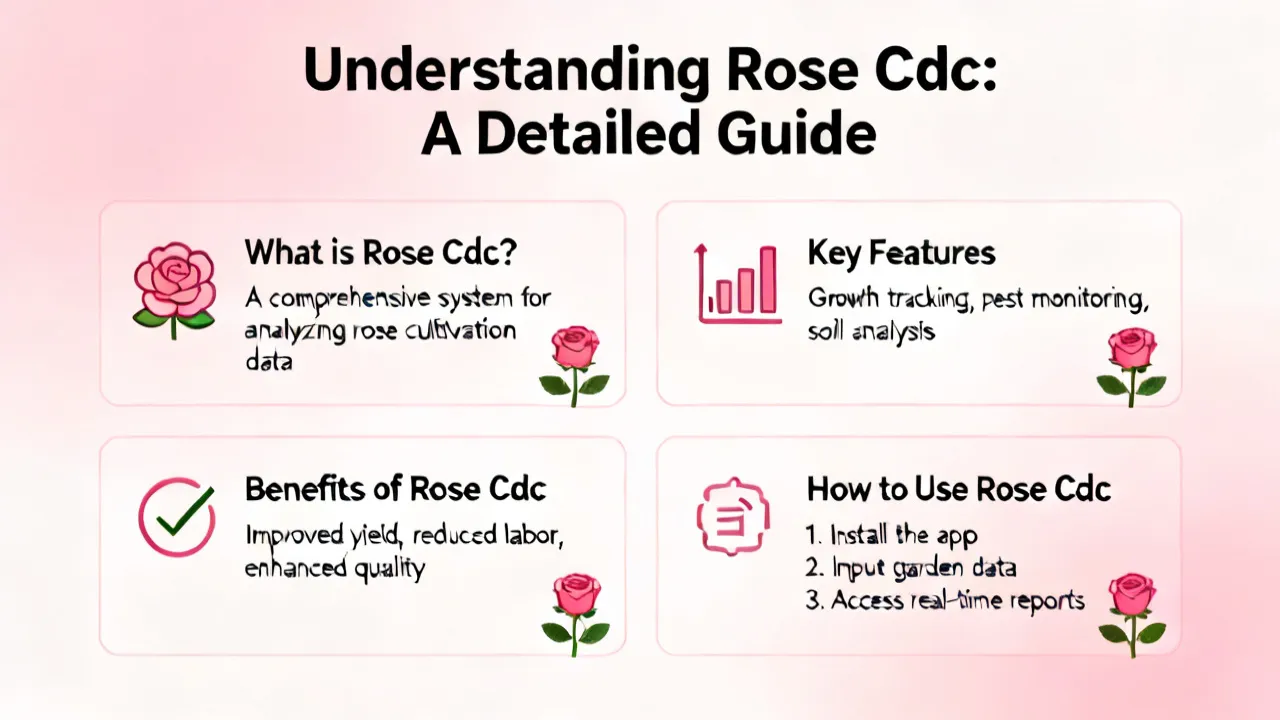
Understanding Rose Cdc: A Comprehensive Guide
This article provides an in-depth exploration of Rose Cdc, a term rapidly gaining attention in specific industries. Our discussion delves into the significance and application of Rose Cdc, its potential impact on various sectors, and expert insights into its future developments. This comprehensive analysis is designed to inform readers about the multifaceted aspects of Rose Cdc, its current applications, and potential advancements.

Understanding Compliance and AML Strategies
This article delves into the intricate realm of Compliance and Anti-Money Laundering (AML) strategies, highlighting their significance in the corporate world. Compliance AML refers to the organizational adherence to legal standards and regulations to deter financial crimes, ensuring transparent and ethical financial practices. This comprehensive guide examines these strategies' complexities and their pivotal role in safeguarding economic integrity.

Mastering Inbound B2B Strategies
The foundation of successful B2B strategies often lies in the effective implementation of inbound marketing techniques. In today's globally connected business environment, inbound B2B strategies have become critical for companies seeking to engage target audiences, optimize lead generation, and establish long-lasting partnerships. Understanding these strategies is essential for companies aiming to thrive in competitive markets.

Exploring B2B MBA Opportunities
Dive into the dynamic world of B2B MBA programs, designed for professionals seeking to enhance their strategic and management skills in a business-to-business context. This comprehensive guide discusses the significance of B2B MBAs in today's market, highlighting how these programs equip leaders with the expertise to navigate complex B2B relationships and drive business success.

Understanding Whitewater Regenerative Blowers
Whitewater Regenerative Blowers are essential in various industrial applications for their efficiency in moving air and gases. These blowers are known for their durability and ability to operate continuously, making them a preferred choice for industries ranging from wastewater treatment to aquaculture. This article explores their features, benefits, and applications, offering readers a comprehensive understanding of their importance in modern industry.

Mastering Employee Retention Strategies
Employee retention has become a critical aspect of organizational success, particularly in the dynamic landscape of 2020. As businesses strive to maintain a stable and productive workforce, understanding effective retention strategies is essential. This article delves into key methods for enhancing employee satisfaction and retention, offering a comprehensive guide for HR professionals and business leaders alike.